

Prelude
Those who drink of the water that I will give them will never again be thirsty. The water that I will give will become in them a spring of water gushing up to eternal life. JESUS OF NAZARETH, JOHN 4:14, Paraphrase
Dallas opens with this statement:
WHEN WE OPEN OURSELVES to the writings of the New Testament, when we absorb our minds and hearts in one of the Gospels, for example, or in letters such as Ephesians or 1 Peter, the overwhelming impression that comes upon us is that we are looking into another world and another life.
I don’t feel that when I read the Gospels. For me, what I find is not another world or another life, but an invitation to real life.
He then quotes Peter and Paul (but not Mary):
“know the love of Christ that surpasses knowledge, so that they may be filled with all the fullness of God … by the power at work within us, that is able to accomplish abundantly far more than all we can ask or imagine” (Ephesians 3:19-20, Paraphrased).
Those who love and trust Jesus “rejoice with an indescribable and glorious joy” (1 Peter 1:8, NRSV), with “genuine mutual love” pouring from their hearts (1:22, NRSV), ridding themselves of “all malice, and all guile, insincerity, envy, and all slander” (2:1, NRSV), silencing scoffers at the way of Christ by simply doing what is right (2:15), and casting all their anxieties upon God because he cares for them (5:7).
He claims that for many Christians:
the life they see there is so unlike what they know from their own experience. This is true even though they may be quite faithful to their church in the ways prescribed and really do have Jesus Christ as their only hope.
The problem, he says, is that “we do not approach and receive that life in the right way. We do not comprehend and convey the wisdom of Jesus and the Bible about the human being and about its redemption by grace.”
He then invites us to follow the Jesus way:
This is a way of gentleness and lowliness, a way of soul rest. It is a way of inner transformation that proves pulling his load and carrying his burden with him to be a life that is easy and light (Matthew 11:28- 30).
And this book, as John Mark Comer says in the Foreword, is a “guide for the spiritual journey.”
I hope this summary will invite you to follow this guide.
Please be aware that this summary contains more than 1/3 of the number of words of the actual book. My attempt to summarize has been greatly compromised by the incredible nature of the content of this book.
Chapter 1 – Introducing Spiritual Formation
The “Beyond Within” and the Way of Jesus
Watch over your heart with all diligence for from it flow the springs of life (Proverbs 4:23)
Executive Summary
Dallas, in his teachings and his writings, was instrumental in reintroducing spiritual formation into the vocabulary of the contemporary Christian culture. In this chapter, he defines his terms and casts before us a vision of what we can become. Here are some of his major points:
-
- Everyone’s spirit gets formed through life’s experiences
- What gets formed are our thoughts, feelings, and intentions – the inner man
- The spiritual place within us has been formed by a world away from God.
- The greatest need we have is the renovation of our hearts
- The spiritual part of us is the non-physical part
- Christian spiritual formation refers to the Spirit-driven process of forming the inner world of the human self in such a way that it becomes like the inner being of Christ himself.
- External manifestations of Christ-likeness are not the focus of the process
- Systems cannot accomplish this transformation
- According to Dallas Willard: “We live from our hearts.” In the foreword, John Mark Comer remarks that he doesn’t know who coined the term “Spiritual Formation,” but he was sure that Dallas was in the room. Dallas tells us, without yet defining “spirit,” that we all have a spirit and that our lives have been forming that spirit. He hints that “the spirit is that which drives and organizes our lives [and] is not physical.” And forming takes place through “the experiences and the choices we have lived through or made in our past.”
Our lives and how we find the world now and in the future are, almost totally, a simple result of what we have become in the depths of our being – in our spirits, will, or hearts. From there we see our world and interpret reality. From there we make our choices, break forth into action, try to change our world. We live from our depths-most of which we do not understand.
He wants us, through spiritual formation, to have a carefully cultivated heart through which we:
assisted by the grace of God, foresee, forestall, or transform most of the painful situations before which others stand like helpless children saying, “Why?”
Yes! Yes! I have seen that in my life. So many of God’s children are crying out, “Why?” I don’t. Is it because I am insensitive, not inquisitive, or just dull? I am realizing that, thanks in part to Dallas, I have that carefully [partially] cultivated heart. Don’t get me wrong. I picked up this book after more than 15 years because my heart needs renovating – desperately!!
Accordingly, the greatest need you and I have – the greatest need of collective humanity – is renovation of our hearts. That spiritual place within us from which outlook, choices, and actions come has been formed by a world away from God. Now it must be transformed.
And it is ongoing. We will always be just beginning this transformation.
The Revolution of Jesus
The revolution of Jesus is in the first place and continuously a revolution  of the human heart or spirit. It did not and does not proceed by means of the formation of social institutions and laws, the outer forms of our existence, intending that these would then impose a good order of life upon people who come under their power. Rather, his is a revolution of character, which proceeds by changing people from the inside through ongoing personal relationship to God in Christ and to one another. It is one that changes their ideas, beliefs, feelings, and habits of choice, as well as their bodily tendencies and social relations. It penetrates to the deepest layers of their souls. External social arrangements may be useful to this end, but they are not the end, nor are they a fundamental part of the means.
Jesus did not send the disciples out to create governments or churches, but they were to “establish beachheads of His person, word, and power in the midst of a failing and futile humanity.” “Churches are not the kingdom of God, but are primary and inevitable expressions, outposts, and instrumentalities of the presence of the kingdom among us.”
The Human “Within”
What our lives amount to…, is largely, if not entirely, a matter of what we become within. This “within” is the arena of spiritual formation and, later, transformation.
He defines the “within” as our thoughts, feelings, and intentions. He says that the surface aspects of our lives are “a good indication of the general nature of the unconscious ‘spiritual depth within.’” However, they don’t tell the full story, nor are they the most revealing of what is going on within.
The author Oscar Wilde once remarked that by the age of forty, everyone has the face they deserve. This is a truly profound, if painful, truth. But it really applies to the “within” expressed by the face-to the heart and also the soul, and not to the face merely as one surface area of the body. Otherwise, it would not much matter.
There is much to the hidden dimension of our lives that “is not visible to others, nor is it fully graspable even by ourselves.” And it is immensely complex.
At a certain point, my own “beyond that is within” (my heart) has been formed and I am then at its mercy. Only God can save me.
The “Spiritual” Aspect of Man
I once attended a conference of Spiritual Directors organized by a Catholic organization. During one of the presentations, the priest asked us to define “spiritual.” I was shocked at what these directors thought was “spiritual.” You may have heard many of your friends say that they are spiritual but not religious. Probe deeper as to what they mean, and you may be surprised as well.
Dallas doesn’t want us to be confused about his use of the term spiritual. Science, he tells us, cannot tell us what is spiritual because it deals with “the outer, physical, measurable, publicly perceptible world; roughly, the world of ‘the five senses.’” Yet, “it is what really matters.” “The spiritual simply is our life.”
Spirituality and Spiritual Formation as Merely Human
Willard describes some of the aberrations to Christian spiritual formation but acknowledges that all of our spirits go through a formation process:
Spiritual formation, without regard to any specifically religious context or tradition, is the process by which the human spirit or will is given a definite “form” or character. It is a process that happens to everyone. The most despicable as well as the most admirable of persons have had a spiritual formation. Terrorists as well as saints are the outcome of spiritual formation. Their spirits or hearts have been formed. Period.
Reaching Beyond Merely Human
Dallas tells us that “Genuine transformation of the whole person into the goodness and power seen in Jesus and His ‘Abba’ Father … remains the necessary goal of human life.”
God Moves Forward
We are pointed to the various movements of God that have moved us forward in our understanding of and devotion to God. And that God is still moving. And there is a current move of God among His people in the area of Christian Spiritual Formation.
Distinctively Christian Spiritual Formation
We can say, in a preliminary manner, that spiritual formation for the Christian basically refers to the Spirit-driven process of forming the inner world of the human self in such a way that it becomes like the inner being of Christ himself.
Christian spiritual formation is focused entirely on Jesus. Its goal is an obedience or conformity to Christ that arises out of an inner transformation accomplished through purposive interaction with the grace of God in Christ. Obedience is an essential outcome of Christian spiritual formation (John 13:34-35; 14:21).
But Dallas warns, “External manifestations of ‘Christ-likeness’ are not … the focus of the process.
A Way of Grace and Rest
To accomplish true Christian spiritual formation, we cannot rely on our own strength, effort, or control.
The primary “learning” here is not about how to act, just as the primary wrongness or problem in human life is not what we do. Often what human beings do is so horrible that we can be excused, perhaps, for thinking that all that matters is stopping it. But this is an evasion of the real horror: the heart from which the terrible actions come. In both cases, it is who we are in our thoughts, feelings, dispositions, and choices – in the inner life – that counts.
The Present Opportunity
Spiritual formation is something we human beings can and must undertake-as individuals and in fellowship with other apprentices of Jesus. While it is simultaneously a profound manifestation of God’s gracious action through his Word and Spirit, it is also something we are responsible for before God and can set about achieving in a sensible, systematic manner. The aim of this book is, accordingly, intensely practical. It aims to help those who are “seeking the kingdom of God and His righteousness” to find them and to fully live in them (Matthew 6:33).
Matters for Thought and Discussion
-
- How do you understand Jesus’ promise about the “water” he gives and about our never thirsting again (John 4:14)? What does it mean for you practically? For others you know?
- Can you describe in some detail the spiritual (nonphysical) side of you? And how does that side of you affect your actions and life? Try extending your description to the spiritual side of a saint (such as Mother Teresa of Calcutta) and of a committed terrorist.
- Do you agree or disagree with the idea that Jesus and his apprentices intend perpetual world revolution through character transformation?
- Compare “spiritual formation” as a merely human reality and project with distinctively Christian spiritual formation.
Chapter 2 The Heart in the System of Human Life
A certain expert stood up to check [Jesus] out, saying: “Teacher; what shall I do to receive eternal life?” Jesus responded, “What does the law say? How do you read it?” And he answered: “You shall love the Lord your God with all your heart, and with all your soul, and with all your strength, and with all your mind; and your neighbor as yourself.” And Jesus said, “Well, there you have your answer. Do that and you will live.” LUKE 10:25-28, Paraphrased
Executive Summary
In this chapter, Dallas continues to define his terms and, in particular, the heart. The major points of this chapter:
-
- The academy has attempted to define human nature as something that is socially constructed.
- The words “heart, spirit, and will” refer to “the same fundamental component of the person.” The same component but different aspects.
-
- Human nature is made up of six aspects. These are a “distinct range of abilities, or things all human beings can and must do.”
-
-
- Thought (images, concepts, judgments, inferences)
- Feeling (sensations, emotions)
- Choice (will, decisions, character)
- Body (actions, interactions with the physical world)
- Social context (personal and structural relations to others)
- Soul (the factor that integrates all of the other aspects to form one life)
-
-
- Modern man orders his life in this hierarchy: body, soul, mind, spirit, God. Christian spiritual formation helps us reorder our life in this hierarchy: God, spirit, mind, soul, body.
Introduction
To care for anything, Willard claims that we must understand it. And since spiritual formation involves caring for our hearts, we must understand it. Some of you may remember the Reader’s Digest articles called: “I am Joe’s _____.”[1] Dallas says this chapter could be called: “Hi. I am Joe’s Spiritual Heart.” Yet, in many respects, as he admits, he will look at the person as a whole.
The Contemporary Battle over Human Nature
Dallas says that the challenge in doing this is that we cannot agree on what human nature is. Or even if there is one. And in fact, there is much rage in this debate:
This is a rage predicated upon the idea that identity restricts freedom. If I am a human being, as opposed to, say, a brussels sprout or a squirrel, that places a restriction upon what I can do, what I ought to do, or what should be done to me.
He claims that this rage tells us two things about human nature:
-
- It is immensely important
- The rage may not be because human nature is unknowable. But rather that there are “strongly armed prejudices” that obscure the facts from the well-intended.
Some of those prejudices come from beliefs that:
-
- Man is purely physical. Just another animal
- All humans are basically good
- What we call human nature is just “social constructions.”
Willard says that throughout both the Western and Greek civilizations, the words “heart, spirit, and will” refer to “the same fundamental component of the person.” The same component but different aspects:
-
- Will is that component’s power to initiate
- Spirit is its fundamental nature as distinct from the physical
- Heart is the central core “to which every other component … owes its proper functioning.”
The Heart Directs the Life
The heart, will, or spirit is the executive center of human life – much like the CEO of a company. And like a CEO, those under it do not always do what the heart directs. But when working properly, they do. Spiritual Formation is about getting us working properly.
The Six Aspects of a Human Life
For Willard, human nature consists of six aspects. These are a “distinct range of abilities, or things all human beings – but not squirrels or brussels sprouts – can and must do.”
-
-
- Thought (images, concepts, judgments, inferences)
- Feeling (sensations, emotions)
- Choice (will, decisions, character)
- Body (actions, interactions with the physical world)
- Social context (personal and structural relations to others)
- Soul (the factor that integrates all of the other aspects to form one life)
-
The ideal of the spiritual life in the Christian understanding is one where all of the essential parts of the human self are effectively organized around God, as they are restored and sustained by him. Spiritual formation in Christ is the process leading to that ideal end, and its result is love of God with all of the heart, soul, mind, and strength, and of the neighbor as oneself. The human self is then fully integrated under God.
The Human Self is Not Mysterious
Although things that are not mysterious are not necessarily obvious, they do require careful study, research, analysis, and reflection. “God has created all things in such a way that they are inherently intelligible.” But human nature consists of parts, and those parts interact and form larger parts that have certain properties and functions. If we would but take the time to study and understand them. Each aspect can be a source of strength or weakness – depending on its condition.
A person who is prepared and capable of responding to the situations of life in ways that are “good and right” is a person whose soul is in order, under the direction of a well-kept heart, under the direction of God.
A Brief Initial Survey of the Six Human Dimensions
Thought
Thought brings things before our minds in various ways (including perception and imagination) and enables us to consider them in various respects and trace out their interrelationships with one another. Thought is that which enables our will (or spirit) to range far beyond the immediate boundaries of our environment and the perceptions of our senses. Through it our consciousness reaches into the depths of the universe, past, present, and future, by reasoning and scientific thinking, by imagination and art – and also by divine revelation, which comes to us mainly in the form of thought.
Feeling
Feeling inclines us toward or away from things that come before our minds in thought. It involves a tone that is pleasant or painful, along with an attraction or repulsion with respect to the existence or possession of what is thought of. How we feel about food, automobiles, relationships, positions, and hundreds of other things illustrates this point.
Willard goes on to connect feeling and thought. They are “interdependent and never found apart.” When put together, they make up the mind.
Will (Spirit, heart)
Volition, or choice, is the exercise of will, the capacity of the person to originate things and events that would not otherwise be or occur. By “originate” here we mean to include two of the things most prized in human life: freedom and creativity. These are really two aspects of the same thing…
Without the inner yes there is no sin, for only that yes (or no) is just us. The thought of sin is not sin and is not even a temptation. Temptation is the thought plus the inclination to sin-possibly manifested by lingering over the thought or seeking it out. But sin itself is when we inwardly say yes to the temptation, when we would do the deed, even though we do not actually do it.
The spirit of a man is the capacity for volition and the exercise thereof. It is the “central core of the nonphysical part of man.”
In this section, Dallas makes a great distinction between what is sin and what is temptation. Only when the will makes an inner yes do we cross the line into sin. We don’t even have to do the deed, but perhaps just linger over it with this inner “yes. “
We know that God is Spirit, and for Willard, that means He is “unbodily personal power.” Man, too is a spirit but has only a little unbodily personal power. This spirit needs to be given by God a godly nature, “and must then expand its godly governance over the entire personality.”
Next, Willard tells us that it is not widely understood that thoughts and feelings are a matter of choice. We invite, allow, and handle these through spirit (or will).
We get our first Dallasism in this section: “Man does not run by will alone,” and this will be a major theme of the book. Spiritual formation (or re-formation or transformation as Dallas likes to put it) is not accomplished merely by willpower.
Body
The body is the “focal point of our presence in the physical and social world.” In his amazingly perceptive way, Dallas puts it like this:
Our choices, as they settle into character, are “farmed out” or “outsourced” to the body in its social context, where they then occur more or less “automatically,” without our having to think about what we are doing. … Just recall how cumbersome it is when we have to think about what we are doing-learning to skate, drive a car, speak a language. The very purpose of learning or training in some activity is to bring it under our direction without our having to think about it or make decisions regarding it. The body makes this possible. It has a “knowledge” of its own.
Dallas sees the body as having the potential of being a major ally in our being re-formed into Christlikeness.
Social Context
We require others. Without others, we would die. This is a matter of who we are – not who we ought to be. And God is the most significant “other.”
… our ties to one another cannot be isolated from our shared relationship to him, nor our relationship to him from our ties to one another. Our relations to others cannot be right unless we see those others in their relation to God. Through others he comes to us and we only really find others when we see them in him.
… rejection, no matter how old one is, is a sword thrust to the soul … Western culture is, largely unbeknown to itself, a culture of rejection. [Rejection] seeps into our souls and is a deadly enemy to spiritual formation in Christ.
Soul
The soul is a higher-level dimension than the others – a sort of meta-dimension “because its direct field of play consists of the other dimensions and through them reaches ever deeper into the person’s vast environment of God and his creation.” The soul is not the person, but because of its interplay with the other aspects, it is often thought to be the whole person. It is the deepest part of the self and “has the capacity to operate (and does, largely operate) without conscious supervision.”
Dallas wants us to think of the soul as a computer that runs a manufacturing operation and only needs attention when it malfunctions or needs to adapt to a new part. “It can be significantly ‘re-programmed.’
But for all of the soul’s vastness and independence, the tiny executive center of the person – that is, the spirit or will – can redirect and re-form the soul, with God’s cooperation. It mainly does this by redirecting the body in spiritual disciplines and toward various other types of experiences under God.
Influence on Action
Our actions come not out of the will alone, but out of the interplay of these dimensions. That’s why spiritual formation will fail if it works on the will alone. And as these dimensions are aligned with God, our actions will be good.
Living away from God orders these dimensions as follows:
Body
Soul
Mind (thoughts and feelings)
Spirit
God
Life under God orders these dimensions in a life-giving way:
God
Spirit
Mind (thoughts and feelings)
Soul
Body
He goes on:
It is the central point of this book that spiritual transformation only happens as each essential dimension of the human being is transformed to Christlikeness under the direction of a regenerate will interacting with constant overtures of grace from God. Such transformation is not the result of mere human effort and cannot be accomplished by putting pressure on the will (heart, spirit) alone.
Matters for Thought and Discussion
-
- What is the relation between caring for something and understanding its nature? How does the contemporary battle over human nature affect our ability today to care for our own well-being and goodness?
- What is the heart and what is its role in human life?
- What are the six basic aspects (or dimensions) of the human being? Does the list leave anything out?
- Relate the six dimensions to the great commandment (Luke 10:25-28) and to spiritual formation in Christ.
- Explore the role feelings play in our current social and personal lives. In media and popular arts. In church activities. Would you say you are (sometimes? never? always?) controlled by your feelings?
- How does choice or volition depend upon thought and feeling? Why can’t we just change our will? (“Human life .. . does not run by will alone.”)
- Do you agree or disagree that actions really do tell who we are?
Chapter 3 – Radical Evil in the Human Soul
Executive Summary
In many respects, this entire chapter could be summarized with the following: We are bad to the core. Very, very bad. But Willard takes us deeper. He knows that to understand how we can be re-formed, it is necessary to understand how bad we are. Because we are so significant in God’s eyes, we have to see the depth of our corruption.
Evil is a Non-Category
Dallas tells of a conference on evil where only a handful of academics thought that there was any such thing as evil. He says that our social and psychological sciences “stand helpless before the terrible things done by human beings.” He claims they are like farmers who don’t believe in the existence of weeds and insects. Their only solution is education.
I remember at the ripe old age of 18, I went to work in two different factories – working side by side with many who never graduated from high school. The level of corruption was appalling. I, too, thought education was the answer. The next year, I worked in a white-collar job alongside all college-educated workers. Because of a union strike in this essential industry, I did the same job I did previously to keep electricity flowing to the neighboring homes, but with a group of college-educated men. I had my eyes opened. Some of these men were the upstanding fathers of my friends. Let’s just say, education is not the answer to the radical evil in our midst.
Soul Ruin Seen in a Church
Dallas doesn’t have to look far to provide us with examples of our total depravity of the heart. I love how Dallas answered a question about 50 years ago in a publication called The Wittenburg Door:[2]
Door: Do you believe in total depravity
Dallas: I believe in enough depravity
This chapter documents a lot of that “enough depravity.” And
sex is far from being the only problem. The presence of vanity, egotism, hostility, fear, indifference, and downright meanness can be counted on among professing Christians. Their opposites cannot be counted on or simply assumed in the “standard” Christian group; and the rare individual who exemplifies them-genuine purity and humility, death to selfishness, freedom from rage and depression, and so on-will stand out in the group with all the obtrusiveness of a sore thumb.
And Beyond the Church
No problem there documenting our ruined soul beyond the church. He admits that it is worse outside the church. Remember Diogenes? He walked the streets of ancient Athens looking for an honest man. The ruin goes way back. In fact, all the way back.
The Prophetic Witness
Today, Dallas says, the only path of spiritual transformation can be found through the “biblical, prophetic illumination of the human soul” to highlight our lostness.
True Understanding
Dallas tells us that experiential knowledge of God and actual engagement with Him is the source of true understanding.
Not-God
Another part of our ruin is that we don’t know that we are not God. He quotes Philip Yancey:
The historian of Alcoholics Anonymous titled his work Not-God because, he said, that stands as the most important hurdle an addicted person must surmount: to acknowledge, deep in the soul, not being God. No mastery of manipulation and control, at which alcoholics excel, can overcome the root problem; rather, the alcoholic must recognize individual helplessness and fall back in the arms of the Higher Power. “First of all, we had to quit playing God,” concluded the founders of AA; and then allow God himself to “play God” in the addict’s life, which involves daily, even moment-by-moment, surrender.
Sadly, Yancey had his own addictions and played God, which he did not confess for over 8 years. This only confirms in spades Dallas’ point.
Denial and its Effects
Yancey’s example should be a warning to all of us about the role of denial. Willard again:
Denial of reality is a capacity inseparable from the human will as we know it, and it has its greatest power when it operates without being recognized as such. (Of course, by “denial” we mean to include not only rejection of what is the case, but also affirmation of what is not the case.)
Sensuality becomes Central
…it turns out that sensuality cannot be satisfied. It is not self-limiting. That is partly because the effect of engaging in the practices of sensuality is to deaden feeling. Then awakens the relentless drive, the desperate need, simply to feel, to feel something. This drive is rooted in basic human nature… We have to have feeling, and it needs to be deep and sustained. But if we are not living the great drama of goodness in God’s kingdom, sensuality through the body is all that is left under our “kingdom.”
Still True Today
“As they did not see fit to center their knowledge upon God, God released them into the grip of a nonfunctional mind, to do what is indecent” The outcome is a humanity “filled with all unrighteousness, wickedness, greed, evil; full of envy, murder, strife, deceit, malice; they are gossips, slanderers, haters of God, insolent, arrogant, boastful, inventors of evil, disobedient to parents, without understanding, untrustworthy, unloving. unmerciful.” And although they still know of the condemnation of God on such things, “they not only do the same, but also give hearty approval to those who practice them” (Romans 1:28-32).
Does anyone have a problem with the above text being descriptive of today? Or how about:
in the last days difficult times will come. For men will be lovers of self, lovers of money, boastful, arrogant, revilers, disobedient to parents, ungrateful, unholy, unloving, irreconcilable, malicious gossips, without self-control, brutal, haters of good, treacherous, reckless, conceited, lovers of pleasure rather than lovers of God, holding to a form of godliness, although they have denied its power. (2 Timothy 3:1-5)
Being Lost
Dallas starts this chapter with some probing questions:
-
- What is a “lost soul?” Just someone God is mad at?
- When is a person lost?
- Is anyone lost today?
He tells us that it is wrong to think of lostness in terms of outcome. Lostness can be seen long before the consequences of being lost are seen. Think of getting lost while driving. It can be obvious that you are lost, but the consequences may not yet be felt. He gives a few definitions:
-
- To be lost is to be out of place
- To be lost means to be irretrievably useless
- To be lost means to be our own god, and our god doesn’t amount to much
- Lost to God means we are also lost to ourselves
- To be lost is to obey ourselves (John Calvin)
- The ultimately lost person cannot want God
- To be lost means that you cannot face up to evil. When you see evil, you say, “Why?” But you don’t ask why when you see good?
- To be lost is to be without remorse
Christians today talk about their brokenness but not their lostness. Dallas says that when we talk about our brokenness, we are talking about our wounds.
… without this realization of our utter ruin and without the genuine revisioning and redirecting of our lives, which that bitter realization naturally gives rise to, no clear path to inner transformation can be found. It is psychologically and spiritually impossible. We will steadfastly remain on the throne of our universe, so far as we are concerned, perhaps trying to “use a little God” here and there.
Matters for Thought and Discussion
-
- Do you accept the idea that human beings apart from God are ruined? How would you describe that ruin? What does it mean in practical, day-to-day terms?
- Do you see how the ruin in question is the result of the “spiritual formation” people receive in the natural course of human life on earth?
- What is your sense of how evil functions (or does not function) among “informed” people today as a legitimate category of explanation of events around us?
- In helping people to find Christ and follow through with spiritual formation in him, can we start with self- esteem? Why or why not? Is there a grain of truth in the self-esteem approach to life? If so, what is it?
- Where can you see evidence of soul ruin in our wider world and in the “church visible”?
- State briefly Paul’s summary of the prophetic witness about the human condition.
- How is pride (being god) at the basis of human ruin?
- Why does sensuality come to play such a major role in human ruin?
- Apply Paul’s discussion of moral corruption in “the last days” to the world we now live in. Scroll through your preferred news provider’s “breaking news” to do this.
Chapter 4 – Radical Goodness Restored to the Soul
“How much larger your life would be if your self could become smaller in it. You would break out of this tiny and tawdry theater in which your own little plot is always being played, and you would find yourself under a freer sky, in a street full of splendid strangers.” G. K. Chesterton, Orthodoxy
Executive Summary
Although an amazing concept, Dallas claims that the human soul is capable of being restored. He attempts in this chapter to outline the things that go on in an unruined soul. Here is one description:
-
- our personality becomes progressively more reorganized around God and his eternal life
- self-denial moves beyond more or less frequent acts to settled disposition and character
- the path forward is not in making sure good and right prevail, but that we don’t push our own way
Self-Denial
Not to be confused with self-rejection, self-denial is also “not to be thought of as a painful and strenuous act.” Rather, it is an overall “settled position of life in the kingdom of God.” Better called death to self, it is “the key to the soul’s restoration.” The emphasis should not be so much on the death but on what the self gets replaced with.
Losing Our Lives to Find Them
An example of losing our lives that he gives is when we learn to make the other’s desires paramount. Not ours. The restored self doesn’t just grin and bear it[3] but actually rejoices “that others enjoy the benefit they do.” He goes on:
In other words, when Jesus said that those who find their lives or souls shall lose them, he was pointing out that those who think they are in control of their lives … will find that they definitely are not in control: they are totally at the mercy of forces beyond them, and even within them. They are on a sure course to disintegration and powerlessness, of lostness both to themselves and to God. They must surrender.
The restored soul gives up the project of being the ultimate point of reference in their lives and gives up doing only what they want.
Doing what you Want – God’s Way
The restored soul can “do what they want to do for the first time.” The soul that has died to self has set aside securing itself, promoting itself, and indulging itself. But when my soul is restored, will “I not still think about such things?” Willard answers that you can, but you won’t.
Taking the Cross
I found “the drive a car” illustration helpful:
Those who are not genuinely convinced that the only real bargain in life is surrendering ourselves to Jesus and his cause, abandoning all that we love to him and for him, cannot learn the other lessons Jesus has to teach us. They cannot proceed to anything like total spiritual transformation. Not that he will not let us, but that we simply cannot succeed. If I tell you that you cannot drive an automobile unless you can see, I am not saying I will not let you, but that you cannot succeed even if I do.
The True Meaning of the Cross and “Counting the Costs”
In this section, Dallas takes to task some of the more traditional understandings of death to self. The practice of “mortification” is one such example that becomes an exercise in self-righteousness. And in terms of counting the cost:
Imagine that you discovered gold or oil on a certain property, and no one else knew about it. Can you see yourself being sad and feeling deprived for having to gather all your resources and “sacrifice” them in order to buy that property? Hardly! Now you know what it is like to deny yourself, take up your cross, and follow Jesus!
Death to self in the gospels “is always the surrender of a lesser dying self for a greater eternal one-the person God intended in creating you.”
Perfect Joy
The restored soul experiences perfect joy, but as St. Francis taught:
For their brotherhood to give a great example of holiness and edification in all lands would not be perfect joy, Francis says. Nor would a great ministry of healing and raising the dead. Nor would possession of all languages and all science, nor all understanding of prophecy and Scripture, and insight into the secrets of every soul. Nor would even the conversion of all unbelievers to faith in Christ! By this point brother Leo is amazed, and he begs Francis to teach him “wherein is perfect joy.” The reply is that if, when they come to their quarters-dirty, wet, and “exhausted from hunger”- they are rejected, repeatedly rebuffed, and finally driven away by force, then “if we accept such injustice, such cruelty and such contempt with patience, without being ruffled and without murmuring,” and “if we bear all these injuries with patience and joy, thinking of the sufferings of our Blessed Lord, which we would share out of love for him, write, O Brother Leo, that here, finally, is perfect joy.”
This is not what is taught from most pulpits as perfect joy.
The Centrality of Giving
What does the restored soul look like? One where giving and forgiving take center stage in one’s life.
Pulling the Whole Self Together
Experience-based confidence in God’s loving care allows all six dimensions of the human self to progressively come into harmony with each other and enables us to be generous in every respect to those around us. Only love of God frames and supports love of neighbor, giving it right direction and the power to carry out its aim of goodness within the kingdom. And love of God and neighbor gradually pulls the entire structure of the person into proper alignment.
What does the restored soul look like? “… our personality becomes progressively more reorganized around God, and his eternal life, self-denial moves beyond more or less frequent acts to settled disposition and character.”
Some Sensitivity to Self will Remain
Do those persons who are dead to self, who easily and regularly deny their selves, have any mere sensitivity to self left? I think we will never be totally above such sensitivity. There is no reason we should be. Mere sensitivity to self is not itself wrong or sinful, so long as we do not welcome it or allow it to “take over” our action and lives.
Standing for the Right without Egotism
I love the refrigerator magnet at the home of a relative who is clearly not a follower of Jesus. It is a picture of Jesus with the words: “Holier than thou.” There is the struggle to the restored self. To the non-follower, even Jesus is holier than thou. Dallas sees the problem as a confusion of “our desire to do what is right and good to prevail with our desire to have our own way.” Thus, the path forward is not in making sure good and right prevail, but that we don’t push our own way. More on this later.
Matters for Thought and Discussion
-
- What do you believe Jesus means when he speaks of the necessity of losing our souls or lives and finding them again in him? (As with most of these “thought” questions, try to be as concrete and practical as possible in responding.)
- Why can I not be Jesus’ apprentice (disciple) if I do not take up my cross and follow him?
- What is it to “count the cost”? What are the gains as well as expenses of discipleship?
- Does Saint Francis’s teaching about “perfect joy” apply to you? Imagine some ways it might apply (what might actually happen) in your real-world context.
- Why is giving so central to the restoration of the soul? How does giving depend on the reality of the kingdom?
- Is being “dead to self” a realistic goal of growth in Christ? Is it the same as being nothing? Is it “healthy”?
- How would you describe one who is dead to self-again, in real-life, practical terms?
- Can we avoid egotism (pride of will) in standing for what is right and good? How would we do that- beyond anger?
Chapter 5 – Spiritual Change
Executive Summary
This chapter introduces Dallas’ VIM pattern for spiritual change. We must have a Vision for what we are to become. We must deliberately Intend to become such a person. We must seek out the Means to implement the vision.
The Reliable Pattern
Dallas opens with a very brief summary of what has gone before:
-
- The basic six dimensions of the human self
- Thought
- Feeling
- Will (Spirit and heart)
- Body
- Social Context
- Soul
- The central principle of human dysfunction and corruption – self-worship
- The foundation of is restoration and renewal – self-denial / dying to self
- Christ-led spiritual (re)formation is moving and being moved from self-worship to self-denial as a “general condition of life in God’s present and eternal kingdom.”
- The basic six dimensions of the human self
Next, he looks at three preliminary misconceptions that must be addressed with three eternal truths:
-
- Transformation into Christ-likeness is possible – Our experience may easily lead us to contradict this conclusion. You might look at all of the failures with Christian leaders and say, “Is that the best we can do?” But Dallas is here to tell us: IT IS POSSIBLE!! “That transformation is not only possible but has actually occurred to a significant degree in the lives of many human beings; and it is necessary if our lives as a whole are to manifest his goodness and power, and if we as individuals are to grow into the eternal calling that God places upon each life.”
- “Miserable sinner” Christianity is a false path to Christ-likeness. This is when we conclude: “We’re only human.” Doesn’t the Bible teach that all of our righteousness is as filthy rags? And no one is good – no, not one? Don’t we all say when someone fails miserably – There but for the grace of God go I? And didn’t Paul say that he was the worst of all sinners? Yes but… Dallas says. That is Chapter 2, but it misses the vision of being imitators of Paul as he is of Christ. And being “perfect as your heavenly Father is perfect.” And the “calling on the Lord from a pure heart.” Both are taught in the Scripture, and we need to understand what each means. “Paul, who wrote these words, was very sure that whatever spiritual formation in Christlikeness he had received might be overwhelmed. There remained in him a spark of evil that could be fanned into a flame were he not watchful or if God did not continuously direct and uphold him in every dimension of his nature. … But to distort this important truth [we are all miserable sinners] into a claim that we can never really change, especially in our hearts, is to substitute a glaring and harmful falsehood for a liberating and life-blessing truth. And that distortion, which sometimes is a true expression of genuine humility, can also be done by those who wish to take themselves off the hook, to enjoy remaining the same in their inner lives. It is not easy to really want to be different.”
- We humans cannot be good apart from God and cannot attain goodness apart from Him.
The General Pattern of Spiritual Growth
Dallas next introduces his V.I.M. pattern of spiritual growth. He claims that spiritual transformation takes place in a similar way to learning a language or becoming sober.
Learning to Speak Arabic
You need a Vision:
-
- What would it look like in my life if I spoke Arabic?
- Why is this desirable?
- What will I gain by learning to speak Arabic?
- Is it worth the time, energy, and money to learn the language?
You need Intention:
-
- Do I really want this (my will)?
- “Effective action has to involve: order, subordination, and progression, developing from the inside of the personality.” Do I have that?
You need Means:
-
- Have I put in place the means of accomplishing this vision: language courses; recordings; travel; immersion in the language and culture, etc?
- “Effective action has to involve: order, subordination, and progression, developing from the inside of the personality.” Do I have that?
- Practice, practice, practice!
VIM: The General Pattern
-
- Vision
- Intention
- Means
If we are to be spiritually formed in Christ, we must have and must implement the appropriate vision, intention, and means. Not just any path we take will do. If this VIM pattern is not put in place properly and held there, Christ simply will not be formed in us.
The Vision of Life in the Kingdom
I was once at an early morning men’s group, and the leader bemoaned that when he died, he would have to worship all the time. That is a man without a vision for life in the kingdom. And boy, do we need one. In this section, Dallas gives his well-known definition of the kingdom of God: “It is the range of God’s effective will, where what God wants done is done.” Chew on that for a while. And what is the nature of life in the kingdom? A place where everything works together for our good and where nothing can cut us off from God’s love and care? Sound good?
Dallas paints the vision of life in the kingdom as a life now and forever in the range of God’s effective will. Where we partake of God’s nature and participate in what is now being done here on earth. Here is an almost throw-away line: “In everything we do, we are permitted to do His work.” Are you a janitor? Wow, you get to participate with God in His work. In whatever you do, God invites you to work with Him on His projects here on earth.
The last point of this section is that this vision needs to be given to us by God. It is not obvious, but is pervasive throughout the word of God and the people of God.
The Intention to Be a Kingdom Person
Dallas says that we “intend to live in the kingdom of God by intending to obey the precise example and teachings of Jesus.”
Now, an intention is brought to completion only by a decision to fulfill or carry through with the intention. We commonly find people who say they intend (or intended) to do certain things that they do (or did) not do.
Here are some ways that our best intentions can fail us:
-
- We never actually decide to do them; we just wish they would happen
- Procrastination holds sway over our actions and prevents us from carrying out what we intended
- Lack of a forceful and clear vision
Means
…the vision and the solid intention to obey Christ will naturally lead to seeking out and applying the means to that end. Here the means in question are the means for spiritual transformation, for the replacing of the inner character of the “lost” with the inner character of Jesus: his vision, understanding, feelings, decisions, and character. In finding such means we are not left to ourselves but have rich resources available to us in the example and teachings of Jesus, in the Scriptures generally, and in his people.
The starting point of the “means” is “identifying the thoughts, feelings, habits of will, social relations, and bodily inclinations that prevent us from living out the vision.
Training “Off the Spot”
In this section, Dallas provides some general guidelines for us to work towards Christ-likeness:
-
- Study and meditation on Christ himself and on the teachings of Scripture about God, his world, and my life
- Deep reflection on the nature and bitter outcome of the standard human way of dealing with life
- Consciously practice self-sacrificial actions in less demanding situations explicitly
- I can learn how to not continuously look out for number 1, but rather look out for others
- I can learn about and meditate on the lives of other saints
- I can study the bitter world of legal adversaries – at how people learn to hate one another in court – to see if I want to be part of that.
- I can earnestly and repeatedly pray that God will direct my inner being to change the things there that will enable me to obey His Son.
- And many other things can be done as means to fulfilling the vision of life in God that we intend and have chosen.
Dallas summarizes:
So the problem of spiritual transformation (the normal lack thereof) among those who identify themselves as Christians today is not that it is impossible or that effectual means to it are not available. The problem is that it is not intended. People do not see it and its value and decide to carry through with it. They do not decide to do the things Jesus did and said.
Matters for Thought and Discussion
-
- Do the common failures of Christian leaders and laypeople prove that transformation into Christlikeness is impossible? Why or why not?
- Is “miserable sinner” Christianity an accurate portrayal of the redeemed life in Christ? What is the valid point in the “miserable sinner” version?
- If we are active in the process of spiritual formation, does that mean we are acting “on our own”? How do grace and effort interrelate in spiritual growth?
- What is the general pattern of all personal growth? Discuss the “learning to speak Arabic” case as an illustration.
- What is the biblical vision of our lives in the kingdom of God? Give some details that would fit into your life.
- How, concretely, can we “intend to live in the kingdom of God” now?
- How does intention relate to decision? Can “knowing the right answers” substitute for intention and decision in the spiritual life?
- What are the main means that you personally use for implementing your decision to live in the kingdom of God now? Are they adequate to the intention?
- What measures of “off the spot” training for obedience to Christ do you employ?
Chapter 6 – Transforming the Mind Part 1 – Spiritual Formation and the Thought Life
I have set the LORD continually before me;
because He is at my right hand,
I will not be shaken
PSALM 16:8
Jesus, the very thought of Thee,
With sweetness fills my breast;
But sweeter far Thy face to see,
And in Thy presence rest.
BERNARD OF CLAIRVAUX
Executive Summary
Thoughts are how we are conscious of things.
The realm of thought involves:
-
- Ideas – Changing these is extremely difficult
- Images – Ideas and images are the primary stronghold of evil
- Information – Failure to have the correct information about God, His ways, and about ourselves “destroys the soul, ruins the society, and leaves people to eternal ruin.”
- Our ability to think – The transformation of our thought lives by taking on the mind of Christ – his ideas, images, information, and patterns of thinking-opens the way to deliverance of every dimension of the human self from the oppressive powers of darkness.
Introduction
Dallas begins this chapter:
AS WE FIRST TURNED AWAY FROM GOD in our thoughts, so it is in our thoughts that the first movements toward the renovation of the heart occur. Thoughts are the place where we can and must begin to change. There the light of God first begins to move upon us through the word of Christ, and there the divine Spirit begins to direct our will to more and more thoughts that can provide the basis for choosing to realign ourselves with God and his way.
Dallas claims that the “ultimate freedom” we have is “the power to select what we allow or require our minds to dwell upon.”
What Thoughts Are
He begins to go deeper by defining his terms:
By “thoughts” we mean all of the ways in which we are conscious of things. That includes our memories, perceptions, and beliefs…
The first time I read this book, I put a big “Not true!” to the following:
Interestingly, you can’t evoke thoughts by feeling a certain way, but you can evoke and to some degree control feelings by directing your thoughts. Our power over our thoughts is of great and indispensable assistance in directing and controlling our feelings, which themselves are not directly under the guidance of our will.
And when he said: “We cannot just choose our feelings,” I wrote in big print: “Wrong.” Now, 20 years later, I was a little more circumspect and thought: “Really?” See how I have matured!
But is what he is saying wrong?[4] I will leave that for you to debate with the experts. I think the answer is more nuanced. How does he define feeling? I cannot find a definition in this book even though he devotes an entire chapter to it. From one of his articles, I know he considers anger a feeling.[5] Let’s stick with that and see if his statements work with anger. Can anger be evoked by a feeling? And, can I choose not to get angry?
Cannot anger evoke thoughts of revenge or murder? Someone does something to me, and I get angry. That triggers a memory of a time that the person double-crossed me. Isn’t that a thought?
And how about “cannot choose our feelings?” When someone cuts me off on the highway, it seems to me that I can choose to ignore the driver and his actions or become angry. I know Brian Tracy is a motivational speaker and not a medical person, but he claims that we do choose negative emotions and feelings.[6] This drawing from the National Institute for the Clinical Application of Behavioral Medicine identifies five sources of anger:
-
- Disappointment
- Frustration
- Judgement
- Rejection
- Fear

It doesn’t claim that we can choose not to get angry, but they claim that it is a derived feeling. I would claim that if we can catch the source feeling as it hits the amygdala and deal with it, we can choose not to be angry.
Let me digress with one more illustration (rarely do I disagree with Dallas – at my peril! – so I need to drive this home). Fear. As I have learned to live the 23rd Psalm (thanks to Dallas), I believe by choice I have chosen not to fear in many situations. In fact, in this chapter, Dallas will provide just such an example.
Okay, digression finished. Let’s continue with the book summary.
He is dealing with thoughts. I love this description:
Our ability to think and represent things to ourselves [thoughts] also enables us to bring vast ranges of reality-and nonreality-before us. This is not always done in a way that is adequate to what we think about or in a way that is even correct. It is actually a part of the greatness of thought that it is not limited to accuracy or even reality. It can consider-bring before our minds-what is not the case but could be, or what ought to be though it is not, as well as what never should be.
Thoughts are what we use to plan the future. The realm of thought involves:
-
- Ideas
- Images
- Information
- Our ability to think
This chapter plunges into initial details on all four. But most time is spent on what Dallas considers the two most important: Ideas and Images.
Ideas
Ideas are very general models of or assumptions about reality. They are patterns of interpretation, historically developed and socially shared. They sometimes are involved with beliefs but are much more than belief and do depend upon it. They are ways of thinking about and interpreting things. They are so pervasive and essential to 1 we think about and approach life that we often do not even know they are there or understand when and how the at work. Our idea system is a cultural artifact, growing up with us from earliest childhood out of the teachings, expectations, and observable behaviors of family and community.
According to anthropologists, our world consists, not just of the people and things around us, but “a ‘symbolic reality,’ which is superimposed upon material reality. These are our ideas. He points us to freedom as an idea portrayed in automobile ads. According to Dallas, most people find it extremely difficult to “recognize which ideas are governing their lives, and how those ideas are governing their lives.” One reason that most of us find that difficult is because these ideas are our “symbolic reality.” There is no other.
Spiritual Formation Must Transform Ideas
According to Dallas, to allow our minds to be transformed, we must:
-
- Recognize the ideas that govern us
- Identify which ideas (and idea systems) lead to a life away from God
- Replace those ideas with the idea system that Jesus lived and taught.
“let this mind be in you, which was also in Christ Jesus” said Paul in Phillipians 2:5.
The Changing of Ideas is Extremely Difficult
The subtitle summarizes this subsection completely.
Images
Ideas are abstract whereas images are concrete and specific. Often images have a “powerful emotional and sensual linkage to governing idea systems.” A person may have had a crime committed against them by a member of a particular race. And subsequently, the image of the crime would influence a prejudicial idea system.
Jesus, of course, understood the great significance of images and has, indeed, become one himself. Intentionally. He also carefully selected an image that brilliantly conveys himself and his message: the cross.
Strongholds of Evil
For Dallas, ideas and images are “a primary stronghold of evil in the human self and in society.” They
-
- Determine how we handle our everyday circumstances
- Attach meaning to what we are going through
- Cause blind spots to reality
- Are the primary focus of Satan’s efforts to derail the kingdom of God
In Becoming Dallas, Gary Moon reports that Jane Willard’s favorite statement in this book is:
“The single most important thing in our minds is…”
And then we wait with bated breath. What is THE SINGLE MOST IMPORTANT THING IN OUR MINDS?
Dallas tells us that it is our idea of God and the images that we attach to Him. He quotes A.W. Tozer:
That our idea of God corresponds as nearly as possible to the true being of God is of immense importance to us. Compared with our actual thoughts about Him, our creedal statements are of little consequence. Our real idea of God may lie buried under the rubbish of conventional religious notions and may require an intelligent and vigorous search before it is finally unearthed and exposed for what it is. Only after an ordeal of painful self-probing are we likely to discover what we actually believe about God.
A right conception of God is basic not only to systematic theology but to practical Christian living as well. It is to worship what the foundation is to the temple; where it is inadequate or out of plumb the whole structure must sooner or later collapse. I believe there is scarcely an error in doctrine or a failure in applying Christian ethics that cannot be traced finally to imperfect and ignoble thoughts about God. [4]
Images Empower Wrong Ideas
Inadequate ideas (like our idea of God) become more dangerous as we embrace wrong images. They can cause us to:
-
- Obsess – repeatedly go after the wrong stuff contrary to reality and common sense
- Hypnotize – blindly and unconsciously move away from God
- Escape critical scrutiny – prevent us from assessing the rightness and wrongness of an idea
One of the most powerful images is the image of ourselves. Are we worthless or the object of God’s great love – the beloved? And a wrong image of ourselves can generate a wide range of wrong ideas.
Deliverance from Destructive Ideas and Images
What can deliver us from these destructive ideas and images? Jesus and His good news. And spiritual formation and thus the renovation of our hearts requires that these destructive ideas and images need to be replaced with the ideas and images that were in Jesus’ heart and mind.
Peter experienced this when he held wrong ideas and images of the Messiah. For the renovation of Peter’s heart, these ideas and images needed to be replaced with Jesus’ ideas and images of the Messiah. Two key statements of Paul highlight this replacement:
16 “For who has understood the mind of the Lord so as to instruct him?” But we have the mind of Christ.[8]
And
5 Have this mind among yourselves, which is yours in Christ Jesus[9]
How do we break the power of these toxic ideas and images? Listen to Dallas:
We can (and must) also begin to take initiative in progressively retaking the whole of our thought lives for God’s kingdom. His grace will accompany us every step of the way, but it will never permit us to be merely passive in our spiritual formation in Christ.
These other two factors are information (or “facts”) and our ability to think-to “connect things up,” to see what must or cannot be the case if certain other things are so.
Information
Information comes before ideas and images. “Without correct information, our ability to think [and have ideas and thoughts] has nothing to work on.” Dallas tells us that our failure to have the correct information about God, His ways, and about ourselves, “destroys the soul, ruins the society, and leaves people to eternal ruin.” This is why Jesus’ first task was to:
-
- Proclaim God and His Kingdom
- Inform people of the availability of the Kingdom and eternal life through Him
When Jesus said in John 17:16 that “He had manifested Your name,” Dallas claims He was saying: “I have made them understand what You are like.” Information!
Spiritual Formation Requires Thinking
Dallas makes this clear:
The gospel of Jesus directly repudiates all false information about God and, therewith, about the meaning of human life; and it works to undermine the power of those ideas and images that structure life away from God. But for it to have this effect we must use our ability to think.
What is thinking? It is the activity of searching out what must be true, or cannot be true, in the light of given facts or assumptions. It extends the information we have and enables us to see the “larger picture”- to see it clearly and to see it wholly. And it undermines false or misleading ideas and images as well. It reveals their falseness to those who wish to know.
The Crucial Role of Good Thinking
Dallas cannot emphasize how crucial good thinking is to us today:
Bluntly, to serve God well we must think straight; and crooked thinking, unintentional or not, always favors evil. And when the crooked thinking gets elevated into group orthodoxy, whether religious or secular, there is always, quite literally, “hell to pay.” That is, hell will take its portion, as it has repeatedly done in the horrors of world history.
Thought, Love, and Worship
How do these three tie together?
To bring the mind to dwell intelligently upon God as he is presented in his word will have the effect of causing us to love God passionately, and this love will in turn bring us to think of God steadily. Thus, he will always be before our minds.
In this way we enter a life of worship. To think of God as he is, one cannot but lapse into worship; and worship is the single most powerful force in completing and sustaining restoration in the whole person. It puts into abeyance every evil tendency in every dimension of the self. It naturally arises from thinking rightly of God on the basis of revealed truth confirmed in experience. We say flatly, Worship is at once the overall character of the renovated thought life and the only safe place for a human being to stand.
The Supreme Worth
Want to see what the thought life of a renovated heart looks like? Look no further than Revelation 5:
12 “Worthy is the Lamb who was slain,
to receive power and wealth and wisdom and might
and honor and glory and blessing!”
13 And I heard every creature in heaven and on earth and under the earth and in the sea, and all that is in them, saying,
“To him who sits on the throne and to the Lamb
be blessing and honor and glory and might forever and ever!”
14 And the four living creatures said, “Amen!” and the elders fell down and worshiped.
Dallas tells us how Tozer described how our current conception of God constitutes a moral calamity.
But why a moral calamity? Because absolutely nothing can inform, guide, and sustain radical and radiant goodness in the human being other than this true vision of God and the worship based thereon. Only this vision can jerk the twisted condition of humanity right. Immanuel Kant said, “Nothing straight can be constructed from such warped wood as that which man is made of.” And humanly speaking he was right. But what is impossible with man is possible with God.
Standing Before God
We have all seen an innocent little child’s desire to hide from a parental authority when we do wrong. Willard tells how his darling granddaughter did just that. That shows us “how necessary it is to us that we be unobserved in our wrong.” And so with us comes the need to regularly stand before God and to have Him stand before us.
Transforming the Details of Life
This concept of standing before God in all that we do provides a significant path for our transformation. We do our work with God. We face an emergency “with the knowledge that God is in the midst of it.” Are we praised? We “move immediately to the goodness of God in our life.” Are we condemned or reproached? I “know that God is supporting and helping me.” Disappointed or frustrated? “I rest in the knowledge that God is over all and that he is working things out.”
I constantly and thoughtfully engage myself with the ideas, images, and information that are provided by God through the Scriptures; his Son, Jesus; and the lives and experiences of his people through the ages. In doing that, I am constantly nourished by the Holy Spirit in ways far beyond my own efforts or understanding. Spiritual (trans)formation of my thought life is achieved by the ministry of the Spirit in the midst of my necessary and well-directed efforts.
Several Dangers in Our Thought Lives with God
Here are some of the dangers Dallas points out:
-
- Pride and overconfidence in ideas, images, or ‘bits of information” simply because they are “ours.”
- Simple ignorance of fact – unless we live in a state of constant openness and learning, lack of the facts can derail our best intentions.
- Allowing our desires to guide our thinking – especially our desire to be right.
- Allowing inappropriate images into our minds can warp our thinking more than we can imagine.
The Way Forward
Key thoughts of Dallas are manifested here:
-
- There are no formulas in the spiritual life
- Our spiritual life runs on interaction with God
- The Vision part of V.I.M. is foundational and “unless properly grasped, the intention will be malformed or nonexistent, and the means implemented will be chaotic and ineffectual.”
Dallas envisions the intention to be formed “to have the great God and Father of our Lord Jesus Christ a constant presence in our minds, crowding out every false idea and destructive image, all misinformation, and every crooked inference and belief.” He then asks us a probing question:
Have you decided [intention] to have God a constant presence in your mind or not?
Once the V and I are in place, Dallas tells us that there are tried and true Means so that our thought lives mirror the mind of Christ. In this section, he emphasizes only one: “draw certain key portions of Scripture into our minds and make them a part of the permanent fixtures of our thoughts.” And not just isolated verses but entire passages like Romans 5:1-8; Romans 8:1-15; 1 Corinthians 13; or Colossians 3:1-17. I would add all of the Sermon on the Mount and all of Romans 8.
Images and Sayings
Other Means include having iconic images and pithy sayings ever before you. The use of icons has played a significant role in discipling a large swath of the Christian church. And memorable sayings have an amazing role to play in transforming our thought lives. Songs can help with that. One I am using right now is: “I want to be, a son of my Father in heaven; I want to love, my enemies.”[10]
Finding Others who are Walking the Walk
Look not at the accomplishments of the great men and women of faith, but look at “the details of how they lived their lives.” And there are many great ones right around you. But they may not look great. Find them.
Doing Justice to the Power of Thought
Dallas warns us not to abandon or shy away from the power of thought just because so many have misused it.
The transformation of our thought lives by taking on the mind of Christ – his ideas, images, information, and patterns of thinking-opens the way to deliverance of every dimension of the human self from the oppressive powers of darkness.
Matters for Thought and Discussion
-
- What are three thoughts that have occupied your mind this week? Why those thoughts, and not some others? What have their effects on your life been?
- What are the main ideas that rule our society today? Do you think they favor a godly life or hinder it? Why?
- What are the major ideas Jesus brought into human history, and how do you see them affecting the contemporary world? Think broadly and of parts of our world most unaffected by Christian teaching.
- Was the distinction between ideas and images made clear in this chapter? Where do you see images most at work in our lives today? Political campaigns? Advertising? Religion? Education?
- What images of God seem most common and influential in our world? How about in your own thinking and devotional life? In that of your friends?
- What were Peter’s ideas and images concerning the Messiah? Do you think we do much better than Peter?
- Reflect on the gospel (New Testament) as basic information about reality. Is that a good way to think of it? What are the alternatives to thinking of it in that way?
- Should followers of Jesus Christ be known as thinkers? Is thinking actually a good thing for Christians to do? How might it help us? Is it dangerous?
- What is worship? How are thought, worship, and spiritual formation related?
- What are some steps we can take to make sure that thought is rightly directed and used in the process of spiritual formation? How can images help that process?
Chapter 7 – Transforming the Mind Part 2 – Spiritual Formation and Feelings
For the kingdom of God is not eating and drinking, but righteousness and peace and joy in the Holy Spirit. ROMANS 14:17
Those who belong to Christ Jesus have crucified the flesh with its passions and desires. GALATIANS 5:2
Executive Summary
Feelings are good servants but disastrous masters. Much of the world run their lives based on feelings. Feelings can be destructive, and that is one reason they need to be reformed. One cannot reform them by denying or repressing them. And we are deceived if we thing will power alone will renovate our feelings. Destructive feelings can be replaced or subordinated.
Feelings are contagious and affect more than just us. Feelings are one of Satan’s primary tools at derailing our lives. “Understanding of the role of feelings in life and in the process of spiritual formation is absolutely essential if that process is to succeed as it should.”
Introduction
Dallas starts us off by telling us that feelings are a blessing and a problem for human life. So, feelings too must be renovated. He claims that we never say to someone: “How are you thinking today?” but rather “How are you feeling today?” Feelings take a front-row seat in our lives “like unruly children clamoring for attention.”
No Head-on Mastery of Feeling
He provides us several examples of feelings:
-
- Anger
- Fear
- Sexual attraction
- Desire for food
- Desire to look good
- Residues of woundedness
Those of us who are mastered by our feelings typically believe that they must be satisfied. And instead of changing them or replacing them, we try to resist them.
Willard makes the blanket and global statement that no one can master their feelings by willpower at the time the choice is present. He also claims that we are deceived if we think otherwise.
One of the goals in renovating our feelings is to reach a point where we “have the resources to do what [we] don’t want to do and to not do what we don’t want to do.” Another goal is to reach the point where we know that they don’t have to be satisfied.
They spend little time grieving over nonfulfillment. And with respect to feelings that are inherently injurious and wrong, their strategy is not one of resisting them in the moment of choice but of living in such a way that they do not have such feelings at all, or at least do not have them in a degree that makes it hard to decide against them when appropriate. … Their aim is not to avoid sin but to avoid temptation – the inclination to sin.
My Identity beyond My Feelings
When we are just starting down the path of renovating our feelings, one of the first major steps is “to sincerely desire to not sin but to have different feelings. Feelings that lead away from sin. … one has to strongly want to not want what one now wants, and to want to want what one does not now want. … [The person] takes steps to avoid those feelings.”
The Vision of Oneself as Really Different
Willard starts us off with:
But achieving this new vision of oneself-of who one would be-must not be presumed to be a mere snap of the fingers. It will require genuine openness to radical change in oneself, careful and creative instruction, and abundant supplies of divine grace.
Then he lists what our identity is before spiritual transformation:
He is now not to be one who will spend hours fantasizing sensual indulgence or revenge, or who will try to dominate or injure others in attitude, word, or deed. He will not repay evil for evil-push for push, blow for blow, taunt for taunt, hatred for hatred, contempt for contempt. He will not be always on the hunt to satisfy his “lust of the flesh, lust of the eyes, and the pride of life” (1 John 2:16, KJV). No wonder he has no real idea of who he will be; and he must content himself with the mere identity: “apprentice of Jesus.”
No wonder we have a lot of work to do!
Feelings Move our Lives – Well, or Badly
Next, he defines for us what he means by “feelings,” knowing full well we cannot compile an exhaustive list:
“Feeling” encompasses a range of things that are “felt”: specifically, sensations, desires, and emotions. We feel warm, hungry, an itch, or fearful. “Feelings” include dizziness and thirst, sleepiness and weariness, sexual interest and desire, pain and pleasure, loneliness and homesickness, anger and jealousy; but also comfort and satisfaction, a sense of power and accomplishment, curiosity and intellectual gratifications, compassion for others and the enjoyment of beauty, a sense of honor, and delight in God. Aesthetic experiences (of art and beauty), personal relations, and actions all involve feeling and, moreover, require that the feeling be somehow “right.”
… feelings move us, and that we enjoy being moved.
Feelings give us an interest in things and move us to action. Without feelings, we would have to “carry on by mere exertions of will or by waiting for things to happen.” He goes on to say that “if we are to be formed into Christlikeness, we must take good care of our feelings and not just let them happen.”
Destructive Feelings
Of course, there are good feelings and destructive feelings. “… the need is to remove the cause (the underlying feelings) and not just the effect (the conflict), which if denied or suppressed without removal of the feelings, will only break out again.”
Even the feelings that harm us are, for the most part, not bad in themselves but are somehow not properly limited or subordinated. They are out of order. Feelings are, with a few exceptions, good servants. But they are disastrous masters.
Denial and Repression of Feeling are not the Answer
The proper course of action is to replace destructive feelings with others that are good, or to subordinate them-anger and sexual desire.
Replacing: First, we need to identify the cause, remove it, and replace it with a good thought. For example, “I am angry at this action because they have done this so many times” (Often this can be uncovered by journaling in God’s presence). This identifies the current destructive feeling as rooted in an unresolved issue from the past. Don’t quickly dismiss it; work hard to forgive the past wrong, understand why the person did it, and let go of any punitive thoughts. Once the root cause has been dealt with (this takes time), ask God to show you how you can replace your feelings of anger and annoyance. For example: think about what it is that you like about the person and articulate it with words and even actions.
Subordinating: For most of us, you have feelings and values that are higher than the destructive feelings. I very often think about my values of fidelity, integrity, or my deep love for my wife that are higher than my anger or sexual desire. Bringing these feelings to the surface and putting them above the destructive feelings can quickly put them in their place.
Feelings and their Underlying Conditions
Dallas takes us deeper into the difference between a feeling and an underlying condition. For example, peace is a condition, and peacefulness is a feeling. Or an out-of-control financial situation can cause great anxiety, fear, and discouragement. Without dealing with the condition, we cannot seriously deal with the feeling. Often, if we take care of the condition, the feeling will take care of itself.
Some underlying conditions cannot change. Dallas uses an example of a minister who lost his wife. He learned that he needed to let go of his grief (the feeling), and that did not mean he let go of his wife (the underlying condition).
Feelings Spread
Dallas highlights something I had not considered about feelings: they spread like a dye in a liquid or a COVID virus at a wedding. He claims that this is the reason some people are hard to reason with. Some feelings have taken over their minds, and they are defending and serving “those feelings at all costs.” He has previously told us that thoughts can generate feelings and “if we allow certain negative thoughts to obsess us, then their associated feelings can enslave and blind us.”
He tells us that feelings can be reasoned with or corrected by reality “only in those… who have the habit and are given the grace of listening to reason even when they are expressing violent feelings or are in the grip of them.” “Combined with a sense of righteousness, strong feeling becomes impervious to fact and reason.”
Those who are wise will, accordingly, never allow themselves, if they can help it, to get in a position where they feel too deeply about any human matter. They will never willingly choose to allow feeling to govern them. They will carefully keep the pathway open to the house of reason and go there regularly to listen.
The Secret of Addiction
When feelings are sought for their own sake, they always demands stronger feeling.
This simple point is what explains the powerful grip of addiction, including the various forms of sexual perversion or addiction to praise. Addiction is a feeling phenomenon. The addict is one who, in one way or another, has given in to a feeling of one kind or another and has placed it in the position of ultimate value in his or her life.
Modernity and Deciding by How We Feel
Here is something Dallas believes all of us must know and understand about our current situation:
People are overwhelmed with decisions and can only make those decisions on the basis of feelings.
We find ourselves:
where people constantly have-or think they have-to decide what to do, they will almost invariably be governed by feelings. Often they cannot distinguish between their feelings and their will, and in their confusion they also quite commonly take feelings to be reasons. And they will in general lack any significant degree of self-control.
Dallas defines self-control like this:
Self-control is the steady capacity to direct yourself to accomplish what you have chosen or decided to do and be, even though you “don’t feel like it.” Self-control means that you, with steady hand, do what you don’t want to do (or what you want not to) when that is needed and do not do what you want to do (what you “feel like” doing) when that is needed.
Images and “Moods”
“Feelings and emotions are fostered and sustained by ideas and images.” The following feelings live off images:
-
- Hopelessness
- Rejection
- Worthlessness
- Not belonging
Images also foster moods:
-
- Dread
- Deficiency
- Depravation
- Anger
- Pain
- Fear
Feelings can all “become moods of the negative type because of the capacity of feelings to spread and pervade everything they touch.”
Positive types of feelings and emotions are present too:
-
- Confidence
- Worthiness of good
- Being acceptable
- Belonging
- Purposefulness
- Love
- Hope
- Peace
- Joy
These too rest on ideas and images.
The Godly Feelings in the Spiritually Transformed Person
Dallas claims that the realm of feelings is not complicated. There is order in that realm. And he makes it sound simple:
When we properly cultivate with divine assistance those few feelings that should be prominent in our lives, the remainder will fall into place.
Only a few feelings? According to Dallas, “they are the feelings associated with love, joy and peace.” He claims that these three are the three fundamental dimensions of the one fruit of the Spirit. “They mutually interpenetrate and inform one another and naturally express themselves in the one fruit ‘… patience, kindness, goodness, faithfulness, gentleness, and self-control.’” This one fruit and all of its dimensions focus on goodness and what is good.
Hope and Faith Lay the Foundation for a Life Full of Love
Dallas defines hope for us:
Hope is anticipation of good not yet here, or as yet unseen. It is, of course, inseparable from joy.
And he defines faith:
Faith is confidence grounded in reality, not a wild, desperate ‘leap.’
Dallas points us to Romans 5:1-5 as a foundation for spiritual formation that we should carefully study, especially as it relates to feelings:
5 Therefore, since we have been justified by faith, we have peace with God through our Lord Jesus Christ. 2 Through him we have also obtained access by faith into this grace in which we stand, and we rejoice in hope of the glory of God. 3 Not only that, but we rejoice in our sufferings, knowing that suffering produces endurance, 4 and endurance produces character, and character produces hope, 5 and hope does not put us to shame, because God’s love has been poured into our hearts through the Holy Spirit who has been given to us.
The path to transformation is laid out in verses 1-2. This leads us to be “thrilled about my tribulations! I know that they will prove God’s power and faithfulness in love to me, and to trust him in all things becomes my settled character.” And this character produces a different and deeper hope (from the hope of verse 2). A “hope that pervades our lives as a whole.”
Love and Its Four Movements
He defines love as “will to good,” that is, to promote another’s good for its own sake. And love expresses the deepest essence of who God is. The world was meant to be “like God” but isn’t. “Love is not natural in our world” as it was intended. Here are Love’s four movements:
-
- God initiates love towards us
- We then feel this love and respond by loving Him
- This then moves us to love others
- And this moves us into a community of love (much like the Trinity)
Joy
Dallas defines joy like this:
Joy is natural in the presence of such love. Joy is a pervasive sense-not just a thought-of well-being: of overall and ultimate well-being. Its primary feeling component is delight in an encompassing good well-secured. It is not the same as pleasure, though it is pleasant. It is deeper and broader than any pleasure.
We are to be full of joy as Jesus taught (John 15:11, 16:24, and 17:13). If your joy is full, there is no room for any more of it. “Full joy is our first line of defense against weakness, failure, and disease.” But joy does not come nor stay without effort. Joy can become less than full “through looking backward at our sins and failures, or forward at what might happen to us, or inward at our struggles with work, responsibilities, temptations, and deficiencies.”
Peace
Again, a definition:
Peace is the rest of will that results from assurance about “how things will turn out.” It is always a form of active engagement with good, plus assurance that things will turn out well.
Here is a description he gives of what a transformed heart looks like relative to peace:
Even in cases where, through no fault of my own, there must be a struggle between me and others, there does not have to be a struggle within me. I may have to resist others, for some good reason, but even so, I do not have to make things come out right. I am not the one in control of outcomes. I do not have to hate those whose course of action I resist, or even get mad at them, and so I can always be at peace within myself as well as toward them.
And he goes on:
The secret of this peace is being abandoned to God. … Because he, who not only loves me but is love, is so great, I live beyond harm in his hands, and there is nothing that can happen to me that will not turn out to my good. Nothing. That is what Romans 8:28 really means. Because of this, “Thou wilt keep him in perfect peace, whose mind is stayed on thee: because he trusteth in thee,” … (Isaiah 26:3, KJV).
It is the positive movement into love, joy, and peace, based on faith and hope in God, that eliminates the destructive feelings or at least eliminates them as governing factors in our lives. We do not go at the change the other way around, trying first to root out the destructive feelings. That is the common mistake of worldly wisdom and of much “religion” on such matters. But we know that in being with Jesus the destructive feelings, with their actions, will drop off us as we increasingly see that “with thee is the fountain of life,” and come to realize that “in thy light shall we see light” (Psalm 36:9, KJV).
Some Things We can Do
Dallas begins to land this plane:
And so, practically speaking, the renovation of the heart in the dimension of feeling is a matter of opening ourselves to and carefully cultivating love, joy, and peace: first by receiving them from God and from those already living in him, and then as we grow, extending love, joy, and peace to others and everything around us in attitude, prayer, and action. Following our VIM pattern, we must intend this and decide that it shall be in all we are and do.
He lists some practical steps we can take:
-
- Take time to assess honestly what our feelings really are
- Purpose to cultivate a genuine and sincere love
- Learn to avoid hypocritical love (we cannot eliminate all hypocrisy)
- Work towards healing from wounds and hopelessness
- Recognize the reality of destructive feelings and abandon them to the Lord (write them out or talk them over with a friend)
- Journal the progress you are making with these feelings
The Extreme Seriousness of Feelings for Spiritual Formation
Landing gear down. Near the ground:
Understanding of the role of feelings in life and in the process of spiritual formation is absolutely essential if that process is to succeed as it should. There are many ways we can go wrong with reference to feelings. They are extremely influential on all that we are and do-much more so than they should be for our own good, and mainly because we accord them greater significance than they deserve. They, more than any other component of our nature, are the “trigger” of sinful action.
At all stages of adult life, feelings are among Satan’s primary instrument[s]. They are used to devastate the soul in the processes of aging, sickness, and death among Christians and non-Christians alike. This need not be the case. Appropriate spiritual formation in Christ will prevent it. We must understand how love, joy, and peace can be our portion in every state of life and can lead us into a radiant eternity with God.
Matters for Thought and Discussion
-
- Think of the great and direct power of feeling (sensation, emotion) over human life. How do you see this at work in daily life? For good? For evil? In yourself? In others?
- What has been your experience with controlling feeling directly or “head-on”? Can it reliably be done? What have you seen with respect to this in lives near you? Say, with anger, lust, or addiction?
- Who would I be if I had different feelings structuring my life (say, those of a saint)? Is this question one that strikes you as hard to answer? Why?
- When you need to resist a feeling (sensation, emotion), upon what do you stand to do so? What are your available resources? Consider irritation at an interruption, or anger at another driver.
- Did it make any sense to you that love, hatred, and so on are not just feelings but conditions of the will, body, and so on, which have feelings linked to them? Do you see any problems with trying to manage feelings directly, without changing the underlying condition?
- What is your experience with feelings spreading? Over different parts of your life and activity? Over groups?
- What are some of the problems you see with basing decisions on feelings? Can we decide without feelings?
- How can feelings be “godly”? Which ones are? Aren’t?
- How are hope and faith related to love, joy, and peace?
- How does pride affect our other “feelings,” say love and peace?
- What are the “four movements” of love in the process of coming to live without fear?
- How would you distinguish peace and joy? Can you really have one of them without the other one? Under what conditions?
- How can one cultivate peace, or joy, or love, or hope? What are some specific ways you have found to be helpful? How does faith fit in?
Chapter 8 – Transforming the Will (Heart or Spirit) and Character
“If anyone is willing to do His will, he will know of the teaching, whether it is of God or whether I speak from Myself.” JOHN 7:17
Would you know who is the greatest saint in the world? It is not he who prays most or fasts most; it is not he who gives most alms, or is most eminent for temperance, chastity, or justice; but it is he who is always thankful to God, who wills everything that God willeth, who receives everything as an instance of God’s goodness, and has a heart always ready to praise God for it.
WILLIAM LAW, A SERIOUS CALL TO A DEVOUT AND HOLY LIFE
Executive Summary
The will depends on our thoughts and feelings, and our thoughts and feelings can be changed by our will. And in so doing, character can be changed. What flows out of the will comes from nothing but us. The goal in the spiritual transformation of the will is “to will one thing,” and that is God’s will. Spiritual disciplines will help bring about the transformation of those parts of the will that need it. And to transform the will will take time.
Introduction
If there was any doubt in your mind, the title of this chapter makes it clear that for Dallas, will, heart, and spirit are the same. He is not going to tell us about four components of the human being but two. But he does distinguish between character and will. From his previous definition, the will is the executive center of a person. The CEO, if you will.
He starts by reviewing what renovated Christlikeness looks like:
We know that they will have a thought life centered on God in his goodness and greatness, and therefore on truth. Also, their feelings will be dominated by the rich array of positive feelings that naturally accompany love, joy, and peace, along with their foundational conditions of faith and hope.
But also reminds us of the interconnectedness of thoughts and feelings with the other dimensions of the person.
Concerning character, he defines it in this way:
Our character is that internal overall structure of the self that is revealed by our long-run patterns of behavior and from which our actions more or less automatically arise.
How the Mind Depends on the Will
The will is “hemmed in by our thoughts and feelings as they actually are.” But the will is also dependent upon our thoughts and feelings. “What we think is … very much a matter of what we allow ourselves to think, and what we feel is very much a matter of what we allow ourselves to feel.” In addition, what we think and feel is very much a matter of what we wish and seek to think and feel. Hang with him here because the next statement is thick. “… the thoughts and feelings that the will depends on in any given moment of choice cannot be changed in that moment. But the will … can change the thoughts and feelings that are to be available to it in future choices.”
We have to have a handle on what our thoughts and feelings because:
Will alone cannot carry us to change. But will, implemented through changing my thoughts and feelings, can result in my becoming the kind of person who just doesn’t do that kind of thing anymore.
Identification of our Will with God’s Will
What does the untransformed will look like?
the usual human will is a place of chaotic duplicity and confusion if not darkness, because it is the playing field of pride and fear and lack of confidence in God, shrouded in layer upon layer of destructive habits.
What does the transformed will look like?
Single-minded and joyous devotion to God and his will, to what God wants for us-and to service to him and to others because of him-is what the will transformed into Christlikeness looks like.
The Basic Nature of the Will
The will is the dimension of our being that derives unique actions and presence from nothing other than itself. “What comes from it comes from nothing else but us.” It is “what prevents a person from being a mere thing.” “… it is the core of who and what we are as individuals.” It is part of what it means to be made in His image.
Will and Human Dignity
Will “gives the person dignity.”
Certainly the will of a spiritual being is the one thing in his creation that God chooses not to override and force to take on a specific character. He allows it to go its way or ways. But that does not mean that such a being gets what it wants.
Thus God permits there to be a world such as we live in, where the wills of human beings are often set on what is evil, wrong, or foolish and where even good and wise inclinations are frequently defeated by other components of the persons involved: the “sin in our members” (Romans 7:5, PAR), social influences, mistaken ideas, overwhelming feelings, or disconnections and ruptures in the depths of the soul.
Duplicity, Deceitfulness, and Darkness
The constant character of the will apart from God is duplicity – or more accurately, fragmentation and multiplicity.
Dallas tells us that the will seems simple but a “choice or act of will is not simple at all.”
The understandings, feelings, and purposes that enter into it may be highly complicated, as are the degrees of strength with which it is taken, as well as the other motivations and actions and choices to which it is related. It is a rich field for the play of good or of evil.
The duplicity and deception come when we “pretend to feel and think one way while acting in another.”
God Hears the Heart
Dallas gives us his take on what Jesus meant when He said: God is looking for people who will worship Him in spirit and in truth. (John 4:23).
What does that mean? It means people who have free-hearted and wholehearted admiration, respect, and commitment to God as the highest being of all. They never try to conceal anything from him and always rely completely on him. God is actively seeking such people, whoever they may turn out to be. … God is spirit, we recall, and nothing is hidden from him. … At the level of the human spirit, nothing can be hidden.
From Surrender to Abandonment to Contentment – and Participation
To see the will transformed, Dallas sees the following movement:
-
- Surrender to the will of God
- Abandonment to the will of God
- Contentment with the will of God
But we are not done yet! Beyond contentment lies intelligent, energetic participation in accomplishing God’s will in our world. We are no longer spectators, but are caught up in a vivid and eternal drama in which we play an essential part. We embrace our imposed circumstances, no matter how tragic they seem, and act for the good in a power beyond ourselves.
Did you ever have a strong-willed child? Dallas claims that “the strongest human will is always the one that is surrendered to God’s will and acts with it.” Yet, “this progression toward full identification of our will with God’s will is one that, perhaps for most people, may not be fully realized in this life. … It is a progression that is there for us to enter into now, through the power that is at work within us as disciples of Jesus Christ. … Our part is to begin as best we can.”
“To Will One Thing”
As we begin on this path, we will come face to face with our fallen character. He calls that condition “entanglement” where our “character will have taken over our habitual or “automatic” ways of thinking and feeling, shaped our social world past and present, permeated our bodies and their responses, and even sunk down into the unconscious depths of our souls.”
“Purity of heart is to will one thing” are the words of Søren Kierkegaard and describe the transformed heart. And that one thing is the will of God.
The Power of Untamed Desire
The primary source of our entanglements is our desires – really, not just our desires themselves, but our enslavement to them and confusion about them. Temptation to sin always originates in desire.
The more we follow a desire until it becomes a habit, it strengthens the power of that desire over us. That creates a sort of inertia. He defines spiritual inertia this way:
It is easier to do what you have done than what you have not, and especially than what goes contrary to what you have done. You tend to keep on doing what you have done; and the more so, the more you have done it.
When the will is enslaved to a desire, it will in turn enslave the mind. To justify itself in satisfying the desire, the will enlists the intellect to provide rationalizations, frequently so bizarre that they amount to selective insanity. Then, of course, the individual in question does and says things that make no sense to anyone. They are hypnotized by their evil desires.
We need to realize that the less sensational entanglements of ordinary lives-perhaps Christian lives-are precisely what keep well-intentioned people from following Christ into the depths and heights of spiritual transformation.
Getting Free from Entanglement
To get free from entanglement, Dallas claims we must overcome duplicity. To will one thing. God’s will. For that we need to know God’s will, which is not as mystical as we might think.
Everyone knows that we should be without guile and malice. Start there! He believes that these are foundational sins. But it won’t be easy. Duplicity and malice have a grip “on us in every dimension of our being.” But he reminds us that spiritual transformation is not a “matter of just changing the will.” All of the other dimensions of self will need changing as well.
The Role of Spiritual Disciplines Here
Do you think that spiritual disciplines will eliminate duplicity and malice? Rather, Dallas claims, they bring them to the surface so that they may be dealt with. And remember, dealing with them and change will not happen overnight.
Sweet Will of God
Transforming the will to will one thing, is not the same as having no will.
Rather, it is for the first time to have a will that is fully functional, not at war with itself, and capable of directing all of the parts of the self in harmony with one another under the direction of God. Now we do not hesitate to do what is right; and to do wrong we would have to work against ourselves.
As he said in chapter 2: “those with a well-kept heart are persons who are prepared for and capable of responding to the situations of life in ways that are good and right.”
Matters for Thought and Discussion
-
- How can we be responsible for our character if in the moment of choice we are always dependent upon the thoughts and feelings we have at that moment? How can we purposively set about to change our own character (with God’s assistance, of course)?
- What, in your own words, does it mean to have “put on … Christ” (Romans 13:14), to have put off the old person and put on the new (Colossians 3:9-10)?
- What in our makeup constitutes our will?
- How does “getting my way” result in a “splintered” will that is ambiguous and incapable of sincerity?
- What is the condition of the will of a “lost” person?
- How do duplicity, deception, and darkness descend upon those who would be their own god?
- What kind of person is God actively seeking?
- How does drama – a dramatic life – arise out of surrender to God’s will?
- “Kiss the rod of affliction”- is that for you and me?
- Have you seen firsthand the effects of the “entanglements” of desire on life?
- Do you know anyone who cannot tell the difference between desire and will, and hence does not know how to oppose his or her own desires?
- Does it make sense to you that spiritual disciplines could retrain the will and reform character?
- What would it be like for you to be “wholly lost” in the will of God?
Chapter 9 – Transforming the Body
Are you unaware that your body is a shrine to the Holy Spirit from God, who is within you? And that you are not your own property? A price has been paid for you. So make your body a showplace of God’s greatness. 1 CORINTHIANS 6:19-20, PAR
No longer present the parts of your body to sin as weapons of wickedness, but present yourselves to God like people who, coming out of death, have eternal life; and present your bodily parts to him as weapons of righteousness. ROMANS 6:13, PAR
Executive Summary
Renovation of the heart requires a renovation of the body. Christian spiritual formation requires the transformation of the body. The body is not inherently evil. The Bible’s teaching about the body needs to be read literally. The members of our body each play a role in our transformation.
Introduction
Dallas starts us out by reminding us of the definition of Christian spiritual formation (or transformation):
SPIRITUAL TRANSFORMATION INTO CHRISTLIKENESS, we have said, is the process of forming the inner world of the human self in such a way that it takes on the character of the inner being of Jesus himself.
And the part that the body plays in this transformation is critical:
The inclinations to wrongdoing that literally inhabit its parts must be eliminated. The body must come to serve us as a primary ally in Christlikeness.
In the transformation of the body, it becomes a servant of God and not our master. We pervert the role of the body that God intended when we make it our primary source of gratification and the chief instrument of getting what we want.
My Body Becomes Me
“My body is the original and primary place of my dominion and my responsibility.” It is through the body that I extend my kingdom. And it is through the body that I first “run into realities that do not yield to my will.” And that leads to destructive emotions like fear, anger, jealousy, and resentment. And in time, these can become “settled attitudes of hostility, contempt, or indifference.”
Our character (both good and bad) is formed by what our body is ready to do in specific situations. How we are moved by things and how we feel about things enter into our being through our body.
… those readinesses and feelings that run our lives, whether we are aware of them or not, reside in fairly specific parts of our bodies, and they reveal themselves to others through our body language-in how we “carry” our bodily parts. They not only govern our immediate responses in action but also are read with great accuracy by observant people around us and then determine how they react to us.
Incarnation and Our Present Bodies
A central reason that Jesus took on flesh (the incarnation) was to “bring redemption and deliverance to our bodies.” The full redemption will happen later, but the transformation is to happen now.
The Profundity of Paul
Paul’s deep insight into all of this comes when we take the words of Paul about the body literally.
-
- We are to kill off or mortify our members (Colossians 1:2)
- We are to not let sin have dominion in our death-bound [mortal] body to obey sin’s desire (Romans 6:12)
- We are to refuse to surrender our body parts to sin as weapons of wickedness
- We are to present our body parts [members] to Him as weapons of righteousness (Romans 6:13)
- Our bodies were dead in trespasses and sin (Ephesians 2:1)
- We are to present our body parts to be servants of righteousness leading to sanctification (Romans 6:19)
- Jesus will give life to your mortal bodies also through His Spirit that dwells in you. (Romans 8:11)
- We are to present our bodies as a living sacrifice (Romans 5:1)
Dallas urges us to take these words about the body as literally talking about the body.
The outcome of spiritual formation is, indeed, the transformation of the inner reality of the self in such a way that the deeds and words of Jesus become a natural expression of who we are. But it is the nature of the human being that the “inner reality of the self” settles into our bodies, from which that inner reality then operates in practice.
We said earlier that temptation is a matter of being inclined to do what is wrong. But where do those inclinations primarily reside? The answer is, they primarily exist in the parts of our bodies. Those inclinations are actually present in those parts and can even be felt there by those who are attentive to their bodies and who are informed, thoughtful, and willing to admit what they find upon careful reflection. Others, too, can recognize the tendencies present in our bodily parts-hands, feet, shoulders, eyebrows, loins, tongue, overall posture-and they can play upon those tendencies to trap us, ensnare us, use us, destroy us. Those who purposefully prey upon others constantly do this.
Dallas points out that it is not only Paul who points to literal parts of the body that get us into trouble, but James, in his lengthy discussion of the tongue, says the same. And it is not just the tongue.
Other members of the body, though not as central to life as the tongue, have their own readiness to act wrongly, with the associated feeling states -“Haughty eyes,” the wise man said, “a lying tongue, hands to shed innocent blood, … feet that run quickly to do evil” (6:17-18, PAR). The shoulders, the stomach and the genitals, the fists and the face are constantly moving us away from God, if they have not already been permeated by the real presence of Christ.
When we lose our temper, what do we lose it to?
But what we lose our temper or our “control” to, what begins to govern our actions at that point, is precisely our bodies and the inclinations to wrong that, as Paul and James both knew, actually inhabit their parts as living forces. You can verify this by carefully observing the bodily behavior of the next person you see in a rage.
Christ Delivers us from Body Hatred
I have often wondered how some people begin cutting themselves. Dallas claims that body hatred develops from a misguided understanding that something about the body is evil. And this leads us to a betrayal of God’s original intent for the body.
The sense of this betrayal is what lies at the heart of youth worship in Western societies. It also is the source of the fear, shame, disgust, and even the anger directed at fat, old age (or just aging), and death and dying that dominate our culture. An outlook focused entirely on the body finds the body’s failure and cessation to be, of course, the ultimate insult from which there is no recovery. You have to understand this if you want to understand Western life and culture.
The same mislocation of the body explains many other intractable problems now facing much of our world: the sexualization of practically everything, abortion, eating disorders, and racial and other discriminations. All of these are rooted in taking the body-our own or that of others-to be the person and thereby depriving ourselves of the spiritual perspective on the person, which alone can enable us to cherish the body and its central role in our lives.
Body hatred also comes from disappointment about our future with it, even from outright fear of the body-of what it is going to do to us. Not accepting God as God puts us in his place, we have noted, and leaves us with nothing to trust and worship but our bodies and their natural powers. The frenzy over physical attractiveness that we see all around us today and the despair over its loss-eventually, in aging and death, for everyone-are the main characteristics of the contemporary climate of life. But that only illustrates, once more, that to be carnally minded-that is, obsessed with the merely natural-is death indeed.
My Body is Not My Property
… this is all the more true for an apprentice of Jesus, whose body and whole being have literally been bought back from evil by God through the death of his Son. It is therefore God’s to do with as he pleases, and he pleases that our bodies should be “a showplace of God’s greatness” (1 Corinthians 6:20, PAR). Christians are the last people on earth who could say, “My body is my own, and I shall do with it what I please.”
The Only Reasonable use of Our Bodies
Accordingly, our “reasonable service,” the only thing that makes any sense for a human being who trusts Christ, is to “present our bodies as a living and holy sacrifice, very pleasing to God” (Romans 12:1-2, PAR). This total yielding of every part of our bodies to God, until the very tissues and muscles that make them up are inclined toward God and godliness and are vitalized in action by the powers of heaven, breaks all conformity with worldly life in this age and transforms us into conformity with the age to come, by completing the renewal of our minds-our powers of thought and imaginations and judgment, deeply rooted in our bodies.
“Don’t even think it,” we sometimes say. And the mark of the renewed mind is what it will “not even think.” This freedom from even the thought of evil-“thinketh no evil” (1 Corinthians 13:5, KJV)-requires that the automatic responses toward evil are no longer running the body and its parts. The bodily tendencies of the “living sacrifice” no longer incline us or start us toward evil without thinking, and then drag our thoughts and feelings after them-and very likely our will (heart, spirit) also.
Taking Steps
How can we take our body and its parts and present them as a living sacrifice to God? First, Dallas calls us back to what he said earlier about the interconnected nature of true spiritual transformation. The mind, the will, the feelings, the spirit, and the body must all be transformed for any of them to be transformed. But there are things specifically for the body that we can work on.
He first strongly recommends two books:
-
- Kept for the Master’s Use by Francis Ridley Havergal https://ccel.org/ccel/havergal/keptuse/keptuse
- A Spiritual Checkup by Margaret Magdalen ( I cannot find a copy of this)
Then these steps:
-
- Actually, release your body to God
- Take a silent solitary retreat for this specific purpose
- Meditate on some of the specific scriptures mentioned here
- Lie face down or face up and explicitly and formally surrender every member of your body to God
- No longer idolize your body
- Do not misuse your body
- Properly honor and care for your body
Sabbath
No book addressing the spiritual transformation of the body can neglect addressing the Sabbath. You’ve got to love a God who tells you to take a day off. But will we? Dallas addresses the role rest plays in this section. He even recommends getting enough sleep as part of fulfilling the Sabbath command. I believe Sabbath has saved my body from many an ill.
I am surprised that Dallas does not spend more time on the subject. Perhaps he is like Mahatma Gandhi, who, when asked by a mother to tell her son not to eat sugar, told her to come back in a week, told her to come back in a week. When she came back, he told her son not to eat sugar. When asked why she had to wait a week, Gandhi replied. “I was still eating sugar a week ago.”
Matters for Thought and Discussion
-
- Do you agree that “the body lies right at the center of the spiritual life”? Why or why not?
- How are our bodies “wrongly positioned” in life on our own?
- In what respects are my life and identity inseparable from my body?
- Is it possible that much of our character consists in what our bodies are “at the ready” to do without being told?
- What did Paul mean by “mortify … your members which are upon the earth” (Colossians 3:5, KJV)? Can we do that?
- Discuss James’s view of the power of the tongue to run on its own and influence our whole body (James 3:1-12). How does that happen?
- Do you agree or disagree that when we “lose our temper,” we lose it to our activated bodies, which then take off on their own?
- What is the source of body hatred, and how does Christ deliver us from it?
- Is my body my property to do with as I wish? Why or why not?
- What are some of the ways we can bring our bodies to peace and strength in God?
- What does Sabbath mean to your body?
- Can the body have spiritual beauty? In what way?
Chapter 10 – Transforming our Social Dimension
The communities of God, to which Christ has become teacher and guide, are, in comparison with communities of the pagan people among whom they live as strangers, like heavenly lights in the world. ORIGEN, CONTRA CELSUM, III
We know that we have passed out of death into life, because we love the brethren. He who does not love abides in death. 1 JOHN 3:14
Executive Summary
The four key concepts in this chapter are:
-
- God made us to all be in circles of sufficiency with the most permanent and intimate is with the Trinity. Our human circles of sufficiency are fragile and doomed to break down unless it is rooted in the only genuinely self-sufficient circle: the Trinity
- Our social dimension is characterized by two essential forms of evil that destroy our relationships: assault and withdrawl.
- The main source of healing for our circles of sufficiency is the Trinitarian love.
- The place to begin the renovation of this dimension of our life is the family.
Circles of Sufficiency
Dallas describes these circles of sufficiency as “Reciprocal rootedness in others.” This is part of the way we were created. We require the knowledge that others are for us to live stable and healthy lives. When this is present, we develop what Dallas calls “circles of sufficiency.” And a healthy person’s inner circle of sufficiency is surrounded by many concentric circles of ever less intimacy. He claims that every circle of sufficiency is sure to break unless it is rooted in the only self-sufficient circle of sufficiency – the Trinity. And it is in that Trinitarian circle that our circles can be healed.
As an aside, I have a problem with this term sufficiency in this context. I have learned that the problem stems from my training in mathematics and logic. In logic or math, if one says P is sufficient for Q, then if P is false, it doesn’t mean Q is false. Q can be true. If God is sufficient for me (in a mathematical sense), I can still be true even if God is false. We know that cannot happen. Even worse is when we apply the mathematical and logical definition of sufficiency to the Trinity. If the Father was false, then the Son could be true – which we know cannot be true. It would be clearer for me if he would call these circles of sufficiency circles of reciprocal rootedness.
The Reality of Rejection
Rejection at many levels is one of the ways these circles are broken. And that rejection can take place in many forms:
-
- Failures of various kinds
- Detachment from parents and other significant figures
- Unfaithfulness in a mate
- Divorce
- Collapse of a profession
- Disloyalty of children
- Just never making it “in,” wherever “in” may be
The Two Basic Forms of Evil in Relations to Others
Dallas describes these basic forms of evil:
-
- Assault or attack
- Withdrawal or distancing
For spiritual transformation to happen, the power of these over us must be broken – both those that come to us and those that come from us. And he assures us that they can be broken.
Understanding Assault and Withdrawal
Assault occurs “when we act against what is good for [others], even with their consent.” Assault includes things like seduction, participating in institutional wrongdoing and evil, adultery, lying, coveting, murder, and theft (the last 6 of the Ten Commandments).
We withdraw from someone when we regard their well-being and goodness as a matter of indifference to us.
Withdrawal is, in some ways, an assault on the person made in the image of God. Thus, the distinction between them is “only a matter of emphasis.”
Spiritual Formation is Necessarily Social
Spiritual formation “affects who I am; and in turn, modifies my relationship to everyone around me.” And not only that but:
Jesus gave a sure mark of the outcome of spiritual formation under his guidance: We become people who love one another (John 13:35).
Dallas wants us to notice two things about 1 John 3:14. “He who does not love abides in death.”
Notice that he did not say, “He who hates,” but simply, “He who does not love.” The mere absence of love is deadly. It is withdrawal. Notice also that he did not say, “He who is not loved,” though that also is true. That, too, is death, but our purpose cannot be to get others to love us.
Love Deeply Rooted in Human Nature
Dallas claims that Jesus’ teaching about love is rooted in our human nature. And because of that, “The life of the human being is one of relating to others.” The way forward in that is having our lives as they were meant to be: full of acts of giving to others. “If you would live, then give – and receive.”
God is Love
What is profound about the good news is not that God loves us. Even Jesus told us that a mean person can love. The profound good news is that God is love.
Watch out Dallas Willard fans. (I’m ducking too). Here is something I disagree with Dallas on. He tells us of the love community that exists in the Trinity. Then he makes this statement:
There is no subordination within the Trinity, not because of some profound metaphysical fact, but because the members of the Trinity will not have it.
All egalitarians struggle with 1 Corinthians 15:28:
. 28 When all things are subjected to him, then the Son himself will also be subjected to him who put all things in subjection under him, that God may be all in all.
Egalitarians attempt to support “there is no subordination within the Trinity” by saying that Paul is saying that Jesus’ human nature – not His divine nature will be subject to the Father. That raises more questions than simply taking Paul at his word. It is hard to imagine such a bifurcated person who is submitted to the Father in His human nature but not in His divine nature. Of course, it is hard for us to imagine a person who has these two natures. But I digress – seriously digress!
So we are made for each other. And that creates in us a longing for community. But the primary community “whether we like it or not, is always God.”
I love this quote from John Donne that Dallas includes:
All mankind is of one author, and is one volume; when one man dies, one chapter is not torn out of the book, but translated into a better language; and every chapter must be so translated; God employs several translators; some pieces are translated by age, some by sickness, some by war, some by justice; but God’s hand is in every translation; and his hand shall bind up all our scattered leaves again for that library where every book shall lie open to one another.
Thoroughly Understanding Wrongness
Dallas believes that:
in order to do our part in the process of spiritual formation of social relations, we must deeply identify and understand what is wrong in our relations with others (whether that wrong is coming from us or toward us) and how it can be changed.
Where are we assaulting others and where are we withdrawing from others? As we pursue that with God, we “do not want to draw too sharp a line between assault and withdrawal.” Withdrawal can be a form of assault.
Our Current Coldness is not Normal
Our world has become colder socially, and what used to be the norm is no longer. We are constantly in the presence “people who are withdrawn from us, who don’t want to acknowledge we are there and frankly would feel more at ease if we weren’t-people who in many cases explicitly reject us and feel it only right to do so? Isn’t the desperate need for approval that drives people so relentlessly today-causing them to go to foolish and self-destructive lengths to be ‘attractive’ or at least to get attention-nothing but the echo of a lost world of constant mutual welcome and blessing?”
What can we do to change this?
The Centrality of Families
Dallas points the way:
But it is especially in our families and similarly close associations that we must identify the elements of assault and withdrawal that defeat love and right relation to others. By insight and practice we must break away from them and reverse them, first by learning a calm but firm noncooperation with those poisonous elements, and then by initiatives of goodwill and blessing in the midst of them. What we do in our meetings as Christians should be focused on enabling us to do this effectively wherever we are. Those meetings should and could be centers from which powerfully redemptive community spreads.
We have to start by recognizing that this state of affairs is not normal.
Marriage
What does it mean to be married, one might ask Dallas?
To be married is to give oneself to another person in the most intimate and inclusive of human relationships, to support him or her for good in every way possible-physically, emotionally, and spiritually, of course, but in every conceivable dimension of his or her being.
How can we teach others what real marriage is? One thing Dallas offers is for us to re-learn the vows taken in the traditional marriage ceremony as recorded in the Book of Common Prayer.
Insight into the meaning of the vows will clearly bring out why the ideal intent of marriage is one man, one woman for life. The mutual submission to each other in awe of the Lord, which is the vision of marriage in Christ, eliminates both assault and withdrawal from this most basic of human relationships. Thereby it provides the matrix or womb from which (in God’s plan) whole human beings can emerge to form whole human communities, under God.
The Market Approach to Marriage
Dallas claims that one of the reasons that marriage is failing us is that many are trying to fulfill their needs outside the bounds of marriage. And there are many available to serve those needs. This results in us constantly shopping around for a better deal.
The ways in which man and wife, or parents and children, would “naturally” serve one another-and traditionally have done so-are increasingly viewed as available (usually less expensively and perhaps with “better quality”) from various sources. This is true all the way from food, clothing, entertainment, and attractiveness to romance, sexual gratification, and surrogate “motherhood” and “fatherhood.”… Individual desire is accepted as a principle governing everything.
The Devastation of Children
Without healthy families and healthy marriages, the children suffer the most. We are raising up generations of children hardened and lonely with the reality of life. These children grow up to be wounded souls. Some will attempt to correct the situation with education, diversity, and tolerance.
Not that these are not good things in themselves. They are. But they do not come close to the root of the human problem. They are superficial. The deep root is not ignorance (at least not ignorance of the things you learn getting an “education”), not prejudice, and not intolerance. A very small percentage of human evil comes from them, everything considered; and almost none of that affects our most intimate relations and turns us into the kinds of people we are.
Minister to Marriage
Again, Dallas reiterates that addressing marriage is the top priority and the path to health and wholeness in the social dimension. We need to recognize that there are no human answers to these problems.
The visible churches, congregations of apprentices to Jesus, must return to the transcendent power of Christ for which they stand. They must drain the assault and withdrawal, the attack and coldness, from the individual men and women who form families under their ministry of Jesus and his kingdom. We must affirm, and make clear by teaching and example, both that and how it takes “three to get married…”
Main Elements in Spiritual Formation of Our Social Dimension
Dallas lays out the four paths to spiritual formation in this area:
-
- Receiving God’s Vision for Our Wholeness in Him
- Abandonment of all Defensiveness
- Genuine Love Predominates in Our Gatherings (See Romans 12:1-21)
- Opening Up Our Broader Social Dimension (“Not having the burden of defending and securing ourselves, and acting now from the resources of our new ‘life from above,’ we can devote our lives to the service of others.”)
Matters for Thought and Discussion
-
- What “circles of sufficiency” have you enjoyed in your lifetime? Describe in detail some occasions when you experienced “completeness” in them. Or occasions when they were “broken.”
- How does rejection affect us? Why does it affect us as it does? Can you recall an occasion, perhaps as a child or youth, when you rejected someone? How did that person respond?
- Do assault and withdrawal cover the field of the evils people do to others? Think about the role these play in ordinary life. Is it possible to disagree with or correct others without assault or withdrawal?
- Consider violations of each of the last six of the Ten Commandments as forms of assault. Do you see how they are? What they do to people?
- Technology (particularly social media) presents us with new challenges and opportunities to either reject, “assault and withdraw,” or love our connections. Consider Larry Crabb’s description of the healing involved in meaningful connection. What can you do to ensure that you are prioritizing and nurturing key relationships that make that kind of healing possible?
- How would loving as Jesus loved eliminate assault and withdrawal within familiar personal relationships?
- How does the Trinitarian nature of God cast light on what human relations could and should be?
- “One nation under God.” How could that possibly be realized?
- How do assault and withdrawal find their way into the lives of children? Are efforts with diversity, education, and tolerance creating a better path forward for our children? Why or why not?
- Must we accept coldness between people as normal now?
- Do you agree that redemption of the marriage relation is central to any hope for transforming our broader social situation today? Or is that too much to put on man-woman relationships?
- How can we “come to see ourselves whole” in God’s life, and how would that help heal our social dimension? Could Paul’s picture of the redemptive fellowship of Christ’s people (Romans 12:1-21) be put into place in your group?
Chapter 11 – Transforming the Soul
“Only give heed to yourself and keep your soul diligently, so that you do not forget the things which your eyes have seen.” DEUTERONOMY 4:9
“Take My yoke upon you and learn from Me, for I am gentle and humble in heart, and you will find rest for your souls.” MATTHEW 11:29
16 Thus says the LORD:
“Stand by the roads, and look,
and ask for the ancient paths,
where the good way is; and walk in it,
and find rest for your souls.
But they said, ‘We will not walk in it.’ Jeremiah 6:16
Executive Summary
In this chapter, Dallas lays out four specific means to accomplish the vision God intends for the transformation of our souls. They are:
-
- Acknowledge your soul and place it under God.
- Yoke yourself to Christ.
- Abandon outcomes to God through humility.
- Receive, study, and internalize the law of God to the point of obedience.
“Each of these action steps builds on the one before. You cannot move forward on the second until you have accomplished the first, and so on. Careful consideration and application of these points will definitely draw you closer to God. You will move forward in your quest to become a fully devoted and transformed follower of Jesus.”[11]
Introduction
Dallas opens this section by describing the centrality of the soul. It:
-
- Runs your life
- Correlates, integrates, and enlivens everything going on in you
- Is the life center
- Regulates whatever is occurring in the other dimensions
- Lies almost entirely outside the realm of conscious awareness
- In the “well-kept heart,” it will be subject to God, and the mind (thoughts and feelings) will be subject to it
- In the “well-kept heart,” the soul will be in harmony with reality
Subsequently, the social context and the body will be subject to the thoughts and feelings “that are in agreement with truth and with God’s intent and purposes for us.”
Psalm 1 Man
To understand what a soul transformed looks like, study and even memorize Psalm 1.
We find that soul:
-
- Delighting in the law of God
- Dwelling day and night, and meditating on it
- Prospering in all that it does
This is not the Ordinary Case
It doesn’t come to anyone’s surprise that we find very few Psalm 1 men or women. In this section, he paints in graphic terms the bleakness of our ordinary condition. But he also casts a vision of the way out. Quoting Robert Wise, he says:
“Reconnected to the Spirit of God, lost souls discover they have power and capacity beyond anything they could have dreamed. The restoration of the soul is more than a recovery of connectedness. Significant strength, ability to achieve, guidance and awareness are imparted.”
Modern Difficulties with the Soul
Dallas tells us of the challenges the scientific community has had with understanding and even accepting the soul. But he also doesn’t address these challenges but instead provides resources for those who want to dig deeper into the controversies.
Soul Unavoidable
In this section, he delineates some soul functions that cannot be ignored:
-
- Art
- Sex
- Sleep
- Ritual
- Family
- Parenting
- Community
- Health
- Meaningful work
All of these “fail and fall apart” as the soul diminishes.
“Meaning” in action is fundamentally a matter of “carryover” or transcendence. I had no idea what this meant so I asked the Dallas Willard Facebook group – administered in part by his daughter Becky. One quoted this from https://dwillard.org :
Dallas Willard correlated carryover and transcendence to explain how spiritual disciplines physically transfers God’s divine reality into our automated, everyday behavior.
That helped me understand carryover, but another helped connect it to meaning:
In an important sense, the soul is part of that “other world” even while it’s part of us. And it has a natural dynamism to it that drives us along a certain developmental path which includes inducements or inclinations toward the actualization of certain classes of goods—those in which “human flourishing” consists. That natural dynamism comes from God, and is a function of what God made the human soul to be and to do—hence the connection to “transcendence.” Insofar as we cooperate with the natural dynamism of the soul, there will be a “carryover” of sustaining energy from the soul to our efforts, and that’s what makes for the sense of meaning, interest, and relative ease with which we can do even difficult things.[12]
In other words (attempting to make understandable the words of a Philosopher who studied under Dallas),
-
- The soul is an amphibian with one leg in the other world and the other in ours
- God has given it a drive toward that which will cause us to flourish.
- In part, that is what the soul was made to do.
- If we cooperate with this drive, we will be sustained by a carryover of the energy from the soul.
- And that energy will provide meaning, interest in godly things, and power to do even difficult things.
This explains one of the things Dallas says in this section:
“It is as if a power beyond us meets our action and carries us. That is always, in some measure, the presence of soul.”
Finding true meaning is a major problem for us today. And yet…
Meaning is one of the greatest needs of human life, one of our deepest hungers -perhaps it is, in the final analysis, the most basic need in the realm of the human experience. Almost anything can be borne if life as a whole is meaningful. But in the absence of meaning, boredom and mere effort or willpower are all that is left.
Performance, Fanaticism, and the Broken Soul
Without meaning in life, we turn to performance. Performance provides
the illusion of meaning for a magical moment, if the performance is successful. Performance presupposes an artificial context in which some portion of life, action, or experience is present as a whole, meaningful, unique, flowing – transcendent to ordinary existence. This may be in some area of art, or in sports, or in politics. Unfortunately, it may also be in religion, or in the intimate relations of life.
Another way to understand the reality of the soul in our lives is to understand fanaticism.
Fanaticism in art, politics, sports, or religion, to name some of the main kinds – is the result of inherently meaningless lives becoming obsessed with performance and then trying to take all of their existence into it.
Dallas uses this example as proof of the existence of a soul.
Our Strategy Here
Here is Dallas’ image of the soul:
Our soul is like an inner stream of water, which gives strength, direction, and harmony to every other element of our lives. When that stream is as it should be, we are constantly refreshed and exuberant in all we do, because the soul itself is then profusely rooted in the vastness of God and his kingdom, including nature, and all else within us is enlivened and directed by that stream. Therefore we are in harmony with God, reality, and the rest of human nature and nature at large.
Since “Life is self-initiating, self-directing, self-sustaining activity and power … only God has life.” We, on the other hand, have derivative life and thus we receive our relatively “self-initiating, self-directing, self-sustaining power” from the hand of God. And thus, the human soul “is the deepest level of life and power.”
God Has a Soul
The Bible frequently refers to God’s soul, but most modern translations do not translate the Hebrew word for soul as soul. Thus, Dallas says, the meaning of the text is gutted of the reality of God’s soul. When the Bible uses soul in reference to God, it is referring to the “deepest, most fundamental level of His being.” And so it is with us. Our soul is the deepest, most fundamental level of our being. Here is my list of verses where the Hebrew word for soul (Hebrew: nephesh and Greek: psyche) is used for God:
-
- Leviticus 26:11 And I set my tabernacle among you: and my soul shall not abhor you.
- Leviticus 26:30 “I will destroy your high places… and My soul [nephesh] shall abhor you”
- Judges 10:6 “So they put away the foreign gods from among them and served the Lord, and his soul [nephesh] could no longer bear the misery of Israel.”
- Psalm 11: 5 The Lord trieth the righteous: but the wicked and him that loveth violence his soul hateth.
- Isaiah 1:14 “Your New Moons and your appointed feasts My soul [nephesh] hates”
- Isaiah 42:1 “My servant, whom I uphold, my chosen, in whom my soul [nephesh] delights”
- Jeremiah 32:41 “I will rejoice in doing them good, and I will plant them in this land in faithfulness, with all my heart and all my soul [nephesh].”
- Jeremiah 6:8Be thou instructed, O Jerusalem, lest my soul depart from thee; lest I make thee desolate, a land not inhabited.
- Jeremiah 9:9Shall I not visit them for these things? saith the Lord: shall not my soul be avenged on such a nation as this?
- Jeremiah 15:1 “Then the Lord said to me, ‘Though Moses and Samuel stood before me, yet my heart [nephesh] would not turn toward this people. Send them out of my sight, and let them go!
- Jeremiah 32:41 “I will rejoice in doing them good, and I will plant them in this land in faithfulness, with all my heart and all my soul [nephesh].”
- Matthew 12:18 Behold my servant, whom I have chosen; my beloved, in whom my soul [psychē ] is well pleased: I will put my spirit upon him, and he shall shew judgment to the Gentiles.
Acknowledging Our Soul
Dallas tells us that the first step in the spiritual formation of our soul is to acknowledge it, take it seriously, and deal with it regularly. He tells us that as Christians, we “save the soul” and then forget about it. I really liked John Ortberg’s book, Soul Care, and even the concept of caring for our souls as a job for spiritual directors.
And as we care for it, we must never forget “to place it under God.”
The Cries of the Soul
After we learn to acknowledge the soul, we can and must learn to hear its cries. Jesus was a master at that. And He did that out of being “meek and lowly in heart.” (Matthew 11:28-30). Peace comes to the soul by being with God. And “rest to our souls is rest in God.”
Abandoning Outcomes
Do you want rest? Dallas directs us to abandon all outcomes to God. And true humility is “a great secret of rest of the soul because it does not presume to secure outcomes.” How can we do that? “Knowledge from Christ, that He is good and great enables us to cast outcomes on Him.”
No Soul Rest with Sin
Sin destroys that soul rest and, in fact, is destructive of the soul itself. “Sin, through desire and pride, alienates the life in us (the soul) from the life that is in God. … Arrogant wrongdoing is the deepest possible wound people can inflict on their souls.” He then points to the law of God as the path out of this dilemma.
“The Law of the Lord is perfect. Converting the Soul.”
The law is not just rules and commandments. It is “a picture of reality.” During Jesus’ time, the law had been corrupted to turn it “from a pathway of grace to an instrument of cultural self-righteousness and human oppression.” Notice that Jesus tells the lawyers (the keepers of the law) had “taken away the key of knowledge.” (Luke 11:52). They weren’t just creating a bunch of rules; they were taking away the key to knowing God. Knowing the law is the key to knowing God.
“He Restoreth My Soul”
Dallas claims that “the law is an essential part of that [personal] relationship with God… Spirit, covenant, and law always go hand in hand within the path of spiritual formation, for it is the path of one who walks with God.”
Law Hate: Antinomian Christianity
If you want to end all prospects of spiritual formation in yourself and others, “annul the law, ‘and teach others to do the same.’” This is how critical Dallas sees the role of the law in spiritual formation.
According to Dallas, antinomianism is basically the belief ‘that sinning or not sinning – obeying or not obeying the law – has nothing to do with being ‘saved’ or not.”
The Effect on Spiritual Formation
This antinomianism has its obvious effects on spiritual formation. There is no use for building the character of Christ into our lives. Dallas gives the obvious example of the Christian who premeditates sin and claims that it will be okay because he will be forgiven afterwards.
Law and Grace Go Together
The presence of the Spirit and of grace is not meant to set aside the law but to enable conformity to it from an inwardly transformed personality. We walk in the spirit of the law, and the letter naturally follows as is appropriate. You cannot separate spirit from law, though you must separate spirit and law from legalism -righteousness in terms of actions.
He adds:
There is no such thing as grace without law.
Inner Affinity between Law and Soul
Simply put:
-
- Rebellion against the law makes the soul sick
- Love of the law restores the soul
Summary
Here is Dallas’ summary of this chapter:
In summary, then, transformation of our souls requires that we acknowledge its reality and importance, understand scriptural teachings about it, and take it into the yoke of Jesus, learning from him humility and the abandonment of “outcomes” to God. This brings rest to the soul. Then our souls are reempowered in goodness by receiving the law and the Word into them as the structure of our covenant fellowship with God in grace. The law is the structure of a life of grace in the kingdom of God.
Other things may be required for soul recovery in some people: perhaps special acts of deliverance or ministries of inner healing or psychological counseling. Always, the good news of Jesus is presupposed. But the most powerful force for transformation of the soul born “from above” is to walk in righteousness upheld by grace.
Matters for Thought and Discussion
-
- What do you understand the idea that the soul is “deep” to mean? How does it relate to intellectual and cultural tendencies of the twentieth and twenty-first centuries? To biblical teachings?
- Is “Psalm 1 man” realistic? For you? For others you know? What would it look like on the job and in the home?
- How does the “failure of good intentions” relate to disorders of the soul?
- Why is meaninglessness such a problem for modern life? Is it a soul problem?
- Why does fanaticism have such an attraction for the broken soul?
- Do you find the image of the soul as “an inner stream of water” intelligible? Helpful in understanding the Psalms, and so on?
- “God has a soul.” Explain the meaning of the passages referred to on this point.
- What are some ways in which you can acknowledge your own soul?
- How does humility fit in with the “rest of soul” Jesus promises?
- How do “fleshly lusts … wage war against the soul” (1 Peter 2:11)?
- What is antinomianism and how does it affect one’s life and faith today-especially prospects for spiritual formation?
- How is the law and obedience to the law an expression of grace? Does the idea of “an inner affinity between the law and the soul” make sense to you?
[1] Renovation of the Heart – Student Edition
[2] Quoting Aaron Preston in Dallas Willard Facebook group in response to my question September 21, 2026.
Chapter 12 – Children of the Light and the Light of the World
You were formerly darkness, but now you are light in the Lord; walk as children of light (for the fruit of light consists in all goodness and righteousness and truth), verifying what is pleasing to the Lord. EPHESIANS 5:8-10, PAR
The simple program of Christ for winning the whole world is to make each person he touches magnetic enough with love to draw others. FRANK LAUBACH, MAN OF PRAYER
Executive Summary
God has been working since the creation of the world, to create an immense community for Him to dwell in. In this chapter, he looks at the characteristics of those in that community relative to their:
-
- Thought life
- Feelings
- Will (Spirit and Heart)
- Body
- Social Relations
- Soul
He then provides a detailed list of scriptures that define these children of light.
Since spiritual formation is closely aligned with the notion of sanctification, he provides both his views, older perspectives, and a contemporary perspective.
He rounds out this chapter with some marks of the outward manifestations of the children of light.
Introduction
Dallas opens this chapter with a vast overview of two histories of the world. The first of the materialist’s view, followed by God’s view. From the materialist’s view, compressing all of history into a 24-hour day, mankind has been the flash of a light bulb at 11:59:59.99 PM. From God’s perspective, God has been working through this entire period, creating an immense community of people who will be a kingdom of priests under God. Together they will create a dwelling place for God. All that the human race truly desires will be fulfilled. And for now, our characters are being transformed to conform to that future.
A Composite Picture of the “Children of Light”
Being children, they are the offspring of Light and carry its DNA and traits as a child inherits from their parents. These people are not perfect and don’t live in a perfect world. But they are remarkably different. It is somewhat visible on the outside, but most of the difference is on the inside.
Thought Life
-
- They think about God
- They love to dwell on his greatness and loveliness
- They adore Him
- They are God-intoxicated
- They do not dwell upon evil in their thoughts
- Their minds ponder “whatever is true, honorable, right, pure, lovely” etc.
- They are realistically positive
Feelings
-
- Their emotional life is characterized by love
- They love a lot of good things, even people!
- They love their lives and who they are
- They are thankful for their lives
- Joy and peace are with them
- They are confident and hopeful
Will (Spirit and Heart)
-
- They don’t think of themselves first
- They don’t push their way
- They regard others as more important than themselves
- They are abandoned to God’s will
- They do not hesitate to do what is right
Body
-
- The body is constantly poised to do right and good – without even thinking
- Their flesh is not weak but works with their willing spirit
- Their bodies are consecrated to God
- Their automatic responses are things that they later regret
- They instinctively avoid the paths of temptation
- They even look different
- There is a freshness, a quiet strength, and a transparency about them.
- They are rested and playful
Social Relations
-
- They are completely transparent with others
- They have no use for darkness
- They do not conceal their thoughts and feels but also don’t burden everyone with them
- They do not try to manipulate and manage others
- They do not attack others
- They do not withdraw from others
- They are completely noncondemning
- They will not participate in evil
- They do not reject or distance themselves from others who are participating in evil
Soul
-
-
- Those of the flesh will never understand them
- They are not trying hard to be the above kind of people
-
The Scriptural High-Points
Dallas encourages a full-day silent retreat meditating on the following passages that summarize what it means to be children of light.
-
- Matthew 5-7
- Romans 12:1-21
- 1 Corinthians 13
- 2 Corinthians 3:12-7:1
- Galatians 5:22-6:10
- Ephesians 4:20-6:20
- Philippians 2:3-16 ;4:4-9
- Colossians 3:1-4:6
- 1 Peter 2:1-3:16
- 2 Peter 1:2-10
- 1 John 4:7-21
- Micah 6:8
- Deuteronomy 10:12-21
“Usually, I think, these bright passages may inspire longing, but a longing that is tinged with hopelessness and guilt. Now we are in a position to change all of that.”
The Misunderstanding Most Common Here
All of the above presuppose the inner transformation that preceded them. We assume that this is the way we are supposed to be and shame on me, it is not the way I am. Or we think that it is the way we are by nature of our new birth, when we are not. Dallas gives us a simple test: “Do evil and good look good to you?” Through spiritual formation, that should change. Sin should look stupid and ridiculous as well as repulsive.
Understanding Sanctification
Dallas quotes several scholars on the meaning of sanctification. Here is A. H. Strong:
The work of Jesus in the world is twofold. It is a work accomplished for us, destined to effect reconciliation between God and man; it is a work accomplished in us, with the object of effecting our sanctification. By the one, a right relation is established between God and us; by the other, the fruit of the reestablished order is secured. By the former, the condemned sinner is received into the state of grace; by the latter, the pardoned sinner is associated with the life of God …. How many express themselves as if, when forgiveness with the peace which it procures has been once obtained, all is finished and the work of salvation is complete! They seem to have no suspicion that salvation consists in the health of the soul, and that the health of the soul consists in holiness. Forgiveness is not the reestablishment of health; it is the crisis of convalescence. If God thinks fit to declare the sinner righteous, it is in order that he may by that means restore him to holiness.
A Contemporary Interpretation
Then Dallas quotes Wayne Grudem:
a part of the application of redemption that is a progressive work that continues throughout our earthly lives. It is also a work in which God and man cooperate, each playing distinct roles. This part of the application of redemption is called sanctification: Sanctification is a progressive work of God and man that makes us more and more free from sin and like Christ in our actual lives.
With a slight clarification or correction. Dallas believes that sanctification does not necessarily take place immediately after conversion. I like his illustration of a cup of coffee when heated. While being heated, it can still not be hot. And so with us, while being sanctified, we may not be sanctified.
Dallas on Sanctification
So what shall we say about sanctification in summary? It is a consciously chosen and sustained relationship of interaction between the Lord and his apprentice, in which the apprentice is able to do, and routinely does, what he or she knows to be right before God because all aspects of his or her person have been substantially transformed. Sanctification applies primarily to the moral and religious life but extends in some measure to the prudential and practical life (acting wisely) as well.
Sanctification is not:
-
- An experience
- A status
- An outward form
Some Marks of the Children of Light
-
- Whenever they are wrong, they will never defend it
- They are thankful to be found out
- When accused, they will not defend themselves
- They do not feel they are missing out on something good when they refrain from sinning
- They do not fret when evil prospers
- They are governed by the pull of good
- Their path is easy and joyous
Now is the Time to be the Children of Light
Dallas concludes this chapter by claiming that mere talk cannot make a difference in this world. Only demonstration. Reason and fact will not do either. We must show the way out for those who really want out.
Matters for Thought and Discussion
-
- What is the outcome of human history from God’s point of view, and what is your share in it?
- Have you known people who fit the composite picture of the children of light drawn in this chapter? Some who were close? Some moving in that direction?
- Do you take the scriptural descriptions (“high points”) of the children of light to be accurate portrayals of what earlier apprentices of Jesus actually became?
- How do you understand the central thesis of this book, that spiritual transformation only happens as each essential dimension of the human being is transformed to Christlikeness under the direction of a regenerate will interacting with constant overtures of grace from God? Do you agree or disagree with this claim?
- Can people in our churches today put into action the plan for spiritual growth stated by Peter (2 Peter 1:3-11)? Why or why not?
- How would you go about adding self-control to your knowledge (or any of Peter’s other “add-tos”)?
- What do you think of the view of sanctification presented in this chapter? Is it biblically and psychologically correct?
- Is the list of characteristics of the children of light given here adequate? What would you add or take away from it?
- Is the emphasis placed here on the ease of the sanctified life appropriate? Or must we say that the holier you are, the harder life gets?
- How do you see the relationship between the modern rejection of Jesus as the authoritative teacher of the world and the present state of the popular arts (music, movies, etc.)?
Chapter 13 – Spiritual Formation in the Local Congregation
In case I am delayed, I write that you may know how people ought to conduct themselves in the household of God, which is the church of the living God, the support structure and foundation of the truth. 1 TIMOTHY 3:15, PAR
Christ loved the church and gave Himself up for her; that He might sanctify her, having cleansed her by the washing of water with the word, that He might present to Himself the church radiant, having no stain or wrinkle or any other blemish; but that she should be holy and blameless. EPHESIANS 5:25-27, PAR
Executive Summary
In this chapter, Dallas provides some practical views on the current state of our local congregations and what they can look like. He points to the current failure to attain to “children of light” status as distractions. We spend all our time concentrating on the vessel and not the treasure in the vessel.
He outlines “God’s plan for spiritual formation in the local congregation through three stages:
-
- Make apprentices of Jesus starting with who you have
- Immerse these apprentices, where ever they are in the journey, in the presence of God
- Develop the unique means by which Christlikeness is formed in the apprentices. And these means must be more than just preaching and teaching.
Introduction
If a church implemented all that is in this book, what would the church look look like? They would be “entirely devoted to the spiritual formation of those in attendance – to the ‘renovation of the heart’ as we have explained it here.” Dallas points to Ephesians 4:10-16 to find such a church described in the Bible.
A Spiritual Hospital
Like a hospital, there would be individuals all along the road to spiritual recovery. And the church would recognize this and treat each other as such. He then points to the rest of the book of Ephesians (4:17- 6:24) for a further picture of such a congregation and encourages us to carefully study that. He summarizes all of that as these congregations would be made up of “children of light who light up their world.”
Being Realistic about Our Current Congregations
Dallas encourages us that this is not an impossible dream. It has been done in the past and will be done again. But we have to “turn our effort under God in the right direction. And that direction would be one that makes spiritual formation in Christlikeness the primary goal of the local congregation.”
The Central Cause of Our Current Situation
You might be surprised by his diagnosis. It’s not the many specific failures that we have seen in so many congregations. It’s distraction. He then quotes Leith Anderson:
While the New Testament speaks often about churches, it is surprisingly silent about many matters that we associate with church structure and life. There is no mention of architecture, pulpits, lengths of typical sermons [or sermons!], or rules for having a Sunday school. Little is said about style of music, order of worship, or times of church gatherings. There were no Bibles, denominations, camps, pastor’s conferences, or board meeting minutes. Those who strive to be New Testament churches must seek to live its principles and absolutes, not reproduce the details.
Why silent about those things that we spend most of our time with, he asks? Because those things are not primary. When we fail to put into practice those core principles discussed in this book,
is to wander off into a state of distraction, which is where most of our local congregations actually are. They wind up majoring on minors and allowing the majors, from the New Testament point of view, to disappear.
The Vessel and The Treasure
This entire section delineates the difference between the vessel and the treasure within our local congregations. The vessels are things like how we do baptism, the Lord’s Supper, the type of worship, and so on. The treasure is “the real presence of Christ in our midst.”
Righteously Mean Christians
Dallas claims that if we make the vessels the essentials, we “become mean and angry Christians. This is an inevitable result of failing to center everything on becoming people who have the character of Christ.” Why are we so mean? Dallas claims that it is because we are taught “that it is more important to be right …than it is to be Christlike.
How to Avoid the “Vessel” Trap
Is it possible to avoid this trap? Absolutely says Dallas:
Simply stated, the local congregation that would adopt the “principles and absolutes” of the New Testament, with the natural outcome of being and producing children of light, has only to follow Jesus’ parting instructions: “As you go throughout the world, make apprentices to me from all kinds of people, immerse them in Trinitarian reality, and teach them to do everything I have commanded you” (Matthew 28:19-20, PAR).
God’s Plan for Spiritual Formation
I have always taught people to beware of people who tell you: “This is God’s [plan, way, reason, etc].” Except in this case.J Here is what Dallas thinks is God’s Plan for Spiritual Formation:
-
- Making disciples-that is, apprentices-of Jesus.
- Immersing the apprentices at all levels of growth in the Trinitarian presence.
- Transforming disciples inwardly, in such a way that doing the words and deeds of Christ is not the focus but is the natural outcome or side effect. This is what “teaching them to [do everything] I have commanded you” amounts to (verse 20).
Sound familiar. It is the great commission.
Stage 1
We must, as a starting point make apprentices (students, disciples) of Jesus. What is an apprentice of Jesus?
It is to be one of those who have trusted Jesus with their whole lives, so far as they understand them. Because they have done so, they want to learn everything he has to teach them about life in the kingdom of God now and forever, and they are constantly with him to learn this. Disciples of Jesus are those who are with him learning to be like him. That is, they are learning to lead their lives, their actual existence, as he would lead their lives if he were they. This is what they are learning together in their local gatherings, and with those gatherings a constant part of their lives, they are learning how to walk with Jesus and learn from him in every aspect of their individual lives.
Two Inseparable Aspects of Apprenticeship
They are:
-
- The Religious Aspect – learning to understand and do the things Jesus gave us in specific commandments and teachings. For example, how to trust our lives wholly to Christ; how to die to self; and so on.
- The Secular Aspect – learning things like: how to run a business; how to love your wife or husband; and so on.
All that is Required to Begin
Dallas echoes the thoughts of A.W. Tozer when he tells us that, to start out to become a disciple of Jesus, we must both find forgiveness for our sins and take His yoke upon us and learn of Him. When we separate these two, we choke “the life out of the … church.”
Flawed Versions of Faith Negate Spiritual Formation
A flawed view of faith causes the local congregation to allow its members to become Christians without becoming disciples. When we present the gospel as a means of fixing the presenting problems of its hearers, we are presenting a flawed view of faith. The problem “is that they have rejected God.”
Giving Up Your Life
Dallas claims that:
… becoming a disciple is a matter of giving up your life as you have understood it to that point. Jesus made this starkly clear in Luke 14 and elsewhere. And without that “giving up,” you cannot be his disciple, because you will still think you are in charge and just in need of a little help from Jesus for your project of a successful life. But our idea of a “successful life” is precisely our problem.
He then develops a different argument that those organizations that have adopted this strategy cannot sustain it.
This is because the “vessel” that emerges in the course of a particular outbreak of radical discipleship gradually overwhelms the heavenly “treasure” it initially served to convey. That is a primary satanic strategy in defeating the cause of Christ on earth.
He then tells us what this first stage of Jesus’ plan for spiritual formation in the local congregation:
[It] has to do with the vision and the intention sections in our VIM pattern of spiritual growth. If spiritual formation is to be the central focus of the local congregation, the group must be possessed by the vision of apprenticeship to Jesus in kingdom living as the central reality of salvation and as the basic good news, and they must have formed the clear intention to be disciples and to make disciples as the central project of their group.
Disciples are Us
The flow is pretty simple. For many churches committed to discipleship, the emphasis is on making disciples of your neighbors. Dallas says we must first start by making disciples of those who are already there. And for the leadership, it starts with them becoming disciples of Jesus. He warns us:
A too-detailed technique for being and making disciples should be regarded with considerable wariness, because it will certainly presume to take too much into human hands.
Dallas also tries to make clear that he is not talking about purifying the church, that is ridding it of the tares. The tares are among those who need to become disciples.
Stage 2
The second stage (the first concerned the vision and intention) concerns the means. The primary means of this stage is by “immersing the … apprentices into the Trinitarian presence inhabiting and enclosing the group.”
What characterizes a true church of God? For Dallas, it can only be the presence of God. “God’s intent is to be present among his people, and to heal them, teach them, and provide for them.” (See Leviticus 26:11-12 and Exodus 29:44-46).
So what should we expect of a local congregation of disciples of Jesus? If we come at it from the viewpoint of New Testament realities-“principles and absolutes”-and the highest ideals of historic Christianity, we should expect it to be a place where divine life and power is manifestly present to glorify God and meet the needs of repentant human beings. This would imply an atmosphere of honesty, openness, indiscriminate acceptance of all, and supernatural caring, with utter admiration for and confidence in Jesus.
Eliminating Performance
Performance is where we try to make an impression rather than just be what we are. The element of performance would be absent in the Trinitarian gathering, as would constant solicitude concerning “How did the service go?” God is the primary agent in the gathering. The truth is, from the only point of view that matters-God’s-it is very likely no human knows how the service went; and in any case, that cannot be judged by reading overt responses of the attendees.
Stage 3
Stage 2 was all about the means that God will use. Stage 3 is about the means that man with God’s help will use. And that means should be used toward the end of the transformation of the inner being of each disciple.
We Do Not Choose to Believe or Not
Here Dallas attacks a very prevalent belief:
Our beliefs and feelings cannot be changed by choice. We cannot just choose to have different beliefs and feelings. But we do have some liberty to take in different ideas and information and to think about things in different ways. We can choose to take in the Word of God, and when we do that, beliefs and feelings will be steadily pulled in a godly direction.
He uses C. S. Lewis description of his conversion. How there was a moment when he did not believe and then without any other input, a moment when he did believe? Clearly the inner working of God.
And Beyond Teaching
But teaching alone will not transform us. Even preaching of the word.
We must flatly say that one of the greatest contemporary barriers to meaningful spiritual formation in Christlikeness is overconfidence in the spiritual efficacy of “regular church services,” of whatever kind they may be. Though they are vital, they are not enough. It is that simple.
Two Steps of Confidence
Dallas tells us two things we can, with confidence, expect:
-
- Openly expect the apprentices to learn to do the various things that Jesus taught us to do.
- Announce to people that you teach people to do the things that Jesus said to do.
In summary, Dallas encourages us to organize all that we do in the local congregation around the spiritual formation of the apprentices present.
Let that be our only aim, and the triumph of God in our individual lives and our times is ensured. The renovation of the heart, putting on the character of Christ, is the unfailing key. It will provide for human life all the blessing that money, talent, education, and good fortune in this world cannot begin to supply, and will strongly anticipate, within this present life, a glorious entry into the full presence of God.
Matters for Thought and Discussion
-
- Is the “reasonable response” of our churches to the call to spiritual formation (see second paragraph) really a reasonable response?
- Is that response compatible with the picture of the church as a spiritual hospital?
- Do you agree with the claim that distraction is the central cause of the current situation in our churches? Reflect on Leith Anderson’s statement
- Does the distinction between the “vessel” and the “treasure” make sense to you? As applied to Paul? To you? To religious traditions, denominations, and local groups of Christians?
- What effects of vessel importance have you personally seen in Christian practices and endeavors?
- Does “righteous meanness” actually happen? If so, do you agree with the explanation given in this chapter of why it is considered acceptable behavior? How would you explain it?
- As simply as possible, explain how we can avoid “the vessel trap.” We can’t avoid having a vessel, can we?
- What is Christ’s plan for spiritual formation in the local congregation-and worldwide?
- Describe a disciple, and how one becomes a disciple.
- How do misunderstandings of what faith in Christ is disconnect it from spiritual transformation?
- Could it really be true that “outreach” should not be a primary goal of church life? What should be primary goals?
- Could we really eliminate “performance” from our church gatherings? What would our meetings be like if we did?
- How does the priority of the mind in spiritual formation affect the means employed to advance spiritual formation in the local congregation?
- What things could your local congregation do beyond “regular church services” to advance spiritual transformation in its members?
- Could we really publicly announce that we teach people how to actually do the things Jesus said for us to do? What would have to change around the church house if we were to do that?
- “All of the other details of church activities will matter little … so long as all is organized around God’s plan for spiritual formation in the local congregation, as given in Matthew 28:18-20.” Could this possibly be true? If so, what should we do about it?
Postlude
Dallas attempts to summarize the entire work:
The renovation of the heart in Christlikeness-that is, in humanity as God always intended it-is not something that concerns the heart (spirit, will) alone. The heart cannot be renovated if the other aspects of the person remain in the grip of evil. “Willpower”-even inspired willpower-is not the key to personal transformation. Rather, the will and character only progress in effectual well-being and well-doing as all other essential aspects of the person come into line with the intent of a will brought to newness of life “from above” by the Word and the Spirit.
This process requires patience. Watch for divine assistance along the way. Here are some additional questions as we move forward:
-
- Are there areas where my will is not abandoned to God’s will or where old segments of fallen character remain unchallenged?
- Do some of my thoughts, images, or patterns of thinking show more of my kingdom or the kingdom of evil than they do of God’s kingdom-for example, as they relate to money, or social practices, or efforts to bring the world to Christ?
- Is my body still my master in some area? Am I its servant rather than it mine?
As we tread this path with others, remember that:
… the best gift I can give them is always the character and power of Christ in me and in others who really trust him. Beyond that I look to God for the renovation of their hearts as well. I know that, no matter what comes, he is over all.
[1] To read the original “I am Joe’s Heart” Check this out. (accessed April 28, 2026)
[2] The Door was a Christian humor and satire magazine published from 1971-2008, which is still available online (sort of) Wittenburg Door
[3] Even though some recent studies show that grinning while under deep stress can actually help a person endure.
[4] https://www.facebook.com/reel/1340052144508137 retrieved May 30th, 2026
[5] “My anger effects(sic) my other feelings, and conversely” https://dwillard.org/resources/articles/spiritual-disciplines-spiritual-formation-and-the-restoration-of-the-soul retrieved May 30th, 2026
[6] https://www.facebook.com/reel/1340052144508137 retrieved May 30th, 2026
[7] Quoting from Knowledge of the Holy One
[8] 1 Corinthians 2:16
[9] Philippians 2:5
[10] Thanks Andrew!
[11] Renovation of the Heart – Student Edition
[12] Quoting Aaron Preston in Dallas Willard Facebook group in response to my question September 21, 2026.
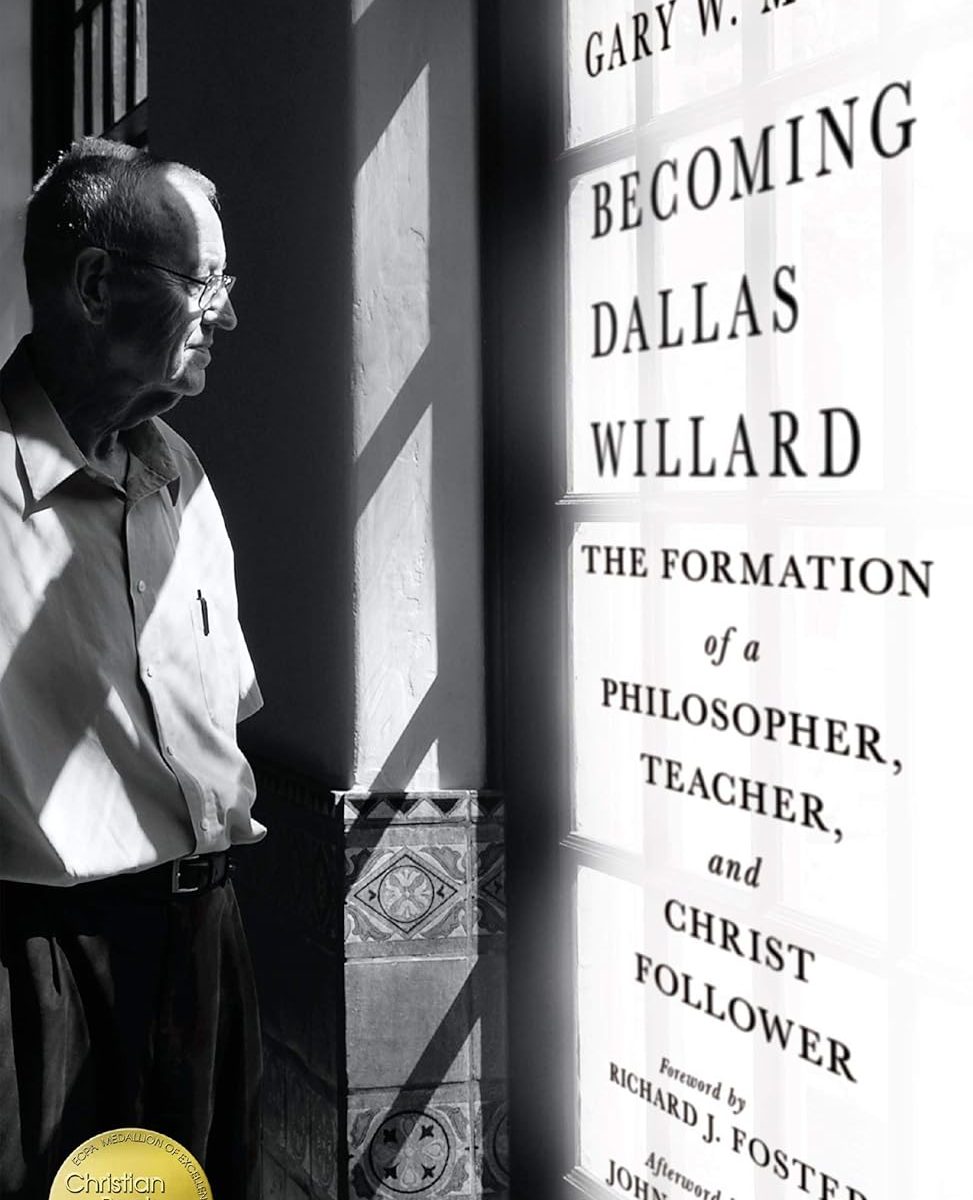

 that it


 for drawing one away from the faith.

 remembers, the parrot-like nature of his prayers in childhood. In reaction against that, he may be persuaded to aim at something entirely spontaneous, inward, informal, and unregularised; and what this will actually mean to a beginner will be an effort to produce in himself a vaguely devotional mood in which real concentration of will and intelligence have no part.” One of their poets, Coleridge, has recorded that he did not pray ‘with moving lips and bended knees’ but merely ‘composed his spirit to love’ and indulged ‘a sense of supplication.’ That is exactly the sort of prayer we want; and since it bears a superficial resemblance to the prayer of silence as practised by those who are very far advanced in the Enemy’s service, clever and lazy patients can be taken in by it for quite a long time.

 wants – In other words, God uses the law of undulation (where we have highs and lows – motivated and demotivated ) in different ways at different times. The demons are to move the man in the exact opposite direction that God is moving him. Lewis also reveals his view of time in this chapter. Humans were created as both spirit (outside of time) and animal (inside of time). “while their spirit can be directed to an eternal object, their bodies, passions, and imaginations are in continual change, for to be in time means to change”
 shows certainly bear witness to the success of this tactic today.
 away from time he feels is rightfully his, will create a peevishness in him.

 something else. The real trouble about the set your patient is living in is that it is merely Christian. They all have individual interests, of course, but the bond remains mere Christianity. What we want, if men become Christians at all, is to keep them in the state of mind I call “Christianity And”. You know—Christianity and the Crisis, Christianity and the New Psychology, Christianity and the New Order, Christianity and Faith Healing, Christianity and Psychical Research, Christianity and Vegetarianism, Christianity and Spelling Reform. If they must be Christians let them at least be Christians with a difference.


